Consistent mealtimes. Delicious food in measured quantities. Your burp means you ate enough.
Vegetarian food, but of the highest quality, including being protein rich – which is why yogis in India include dairy in their diet.
I have been healthier since I began eating this way than I ever had been. Raised as an omnivore, when I ate meat, I was consistently anemic.
It disappeared when I became vegetarian. I attribute it to a more efficient digestion process. Meat is incredibly hard on the human digestive system. Better yet, I can tell that my innards work more efficiently – smooth and easy. It’s wonderful!
When I was a child, my mom fed us meatless meals one or two days weekly, just like she ate when growing up on the farm. They couldn’t afford to kill off all their farm animals. They needed them for producing eggs and milk, as well as pulling the plow, etc. Tractors came along later. I remember riding on my uncle’s brand-new tractor when I was 10 years old. It was very exciting.
Good news! The FDA and American Heart Association approve of vegetarian eating. But that’s not why yogis do it. Yoga’s first ethical principle is ahimsa, non-harming. It is clearly harmful to the animal to eat it. George Bernard Shaw was more graphic about it, saying:
I choose not to make a graveyard of my body with the rotting corpses of dead animals…
A man of my spiritual intensity does not eat corpses.
Yes, spiritual intensity goes along with vegetarianism. Spiritual depth is the purpose of yoga, as described by the ancient sages who created it. You may have to get beyond the hard breathing and sweat before you discover the inner spaciousness that is found only in stillness. This is yoga’s specialty.
In the beginning of my vegetarian process, I thought tofu was a little scary. I knew about beans from my mom’s cooking and from Mexican food, one of my lifelong favorites. Then I discovered Indian food, later Egyptian and Ethiopian cooking. All of these feature bean-and-grain combos, the cornerstone of vegetarian nutrition.
Wheat is a big boon to humankind! I recognize that a current food fad is gluten-free, but I’m hoping it will pass soon. Every person I’ve met who is proudly gluten-free is also unfortunately protein deficient.
Wheat is a high protein grain, readily available in many forms. It was the cultivation of wheat that made civilization possible. When the early humans found they could grow their protein instead of following the herds on their seasonal migrations, they were able to settle into villages. Later came cities.
I had a profound and ecstatic meditation experience where I found the whole universe within my own being. I realized I could never eat meat again, as it would be like eating my own body. Yes, spiritual intensity. Blissful, life-changing spiritual intensity, for which I am ever grateful.
I had to learn how to cook all over again. I went to school back in the day where we had “Home Ec” classes. We were taught about nutrition as well as cost-conscious meal preparation. I knew how to make the cheapest cuts of meat both tender and tasty, though now I confess that the idea turns my stomach.
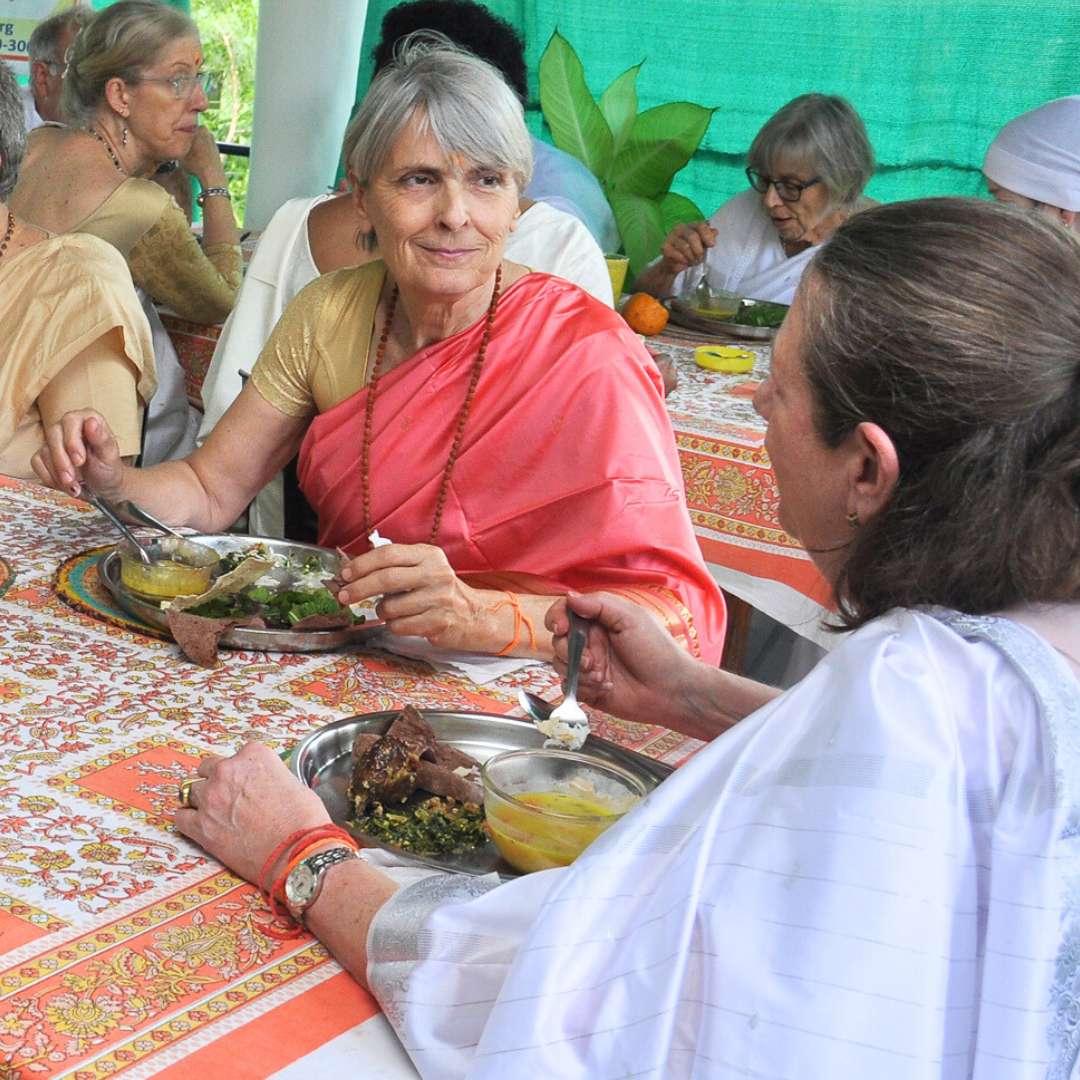
I am still responsible for feeding groups of people every day. In addition to the Ashram residents, we often host yogis on retreat. Making sure they have delicious food is not enough. It must also be nutritious, so they can do the deep practices we enjoy. We get 20 grams of protein in every meal, working with variations on four themes:
- Beans and Grains together (including wheat)
- Nuts
- Tofu (a cheese made from soybeans, another bean)
- Dairy (including cheese)
It is easy to create a variety of palate pleasing meals, especially with the many online recipes now available. We also include all six tastes in every meal, as described by Ayurveda, the medical system aligned with yoga. The combination of the six tastes along with sufficient protein does away with all cravings.
It also makes it easy to give your belly a rest between meals. Yoga recommends 4-6 hours between meals, so your digestive organs can process your food and then rest before their next task. A heathy belly is the key to overall health, according to Ayurveda. Beyond that, it makes you happy.
Consistent meals, this is where I started above. It was when I moved into my Guru’s Ashram that I began eating at the same time every day. I was amazed at how anxiety fell away, both from my mind as well as my body. Food anxiety is a real problem for many people, even if they have the money to feed themselves.
Creating a food discipline is a beautiful yogic discipline. It supports early-to-bed, early-to-rise, as recommended by Ben Franklin, another famous Westerner. Yogis love the pre-dawn hours, where meditation is so easily accessible. The sweet quiet time, on the cusp of sunrise, and the ecstatic energy of the rising sun are the best way to start your day.
When you’ve begun your yoga at 3 or 4 in the morning, maybe as late as 5 am, you’re ready for a real meal soon after. The rest of your meals follow the sun – midday and sunset, or maybe dinner will be a little later in the winter hours or regions near the earth’s poles.
Food! What a glorious punctuation point in the day! However, choosing food that supports your spiritual upliftment may require some retraining. Even your taste buds change. You start to like things you never imagined. It was quite a shock to my mind to discover that my body likes cilantro. I now sprinkle it on lavishly.
Nutrition can be quite complicated. Well, the science of it is fairly simple, whether you’re looking at modern medicine or the ancient medical system of Ayurveda. But we get it all mixed up with family and worse – with need, greed and fear. Fortunately, yoga frees you from these limiting emotions, thus contributing to yogic nutrition and even a yogic family life. Can you imagine?
Resources:
- Search online for “Converting to Vegetarianism” or invest in one of the many books on this important topic.
- The six tastes of Ayurveda are detailed in many online sites, easy to find and to implement in your food choices.
- Swami Nirmalananda teaches a “Yogic Nutrition” course, which covers these many topics in detail. It also features in-kitchen cooking lessons in each class. Check our Program Calendar for dates. Or email us at programs@svaroopayoga.org
















 SVA Blog