Category Archives: Yoga in Life

Saved Her Life

By Rebecca (Rasa) Rivers

Interviewed by Marlene (Matrikaa) Gast, Yogaratna

From her yoga classes and yoga therapy sessions with me, Clair credits yoga with “saving her life.” She describes it in these ways:

I mean that Svaroopa® yoga has enabled me to live the life that I want.  Both of my parents and my older sister suffered from genetic-based osteoarthritis.  At an early age, I was warned that I could look forward to serious physical issues.

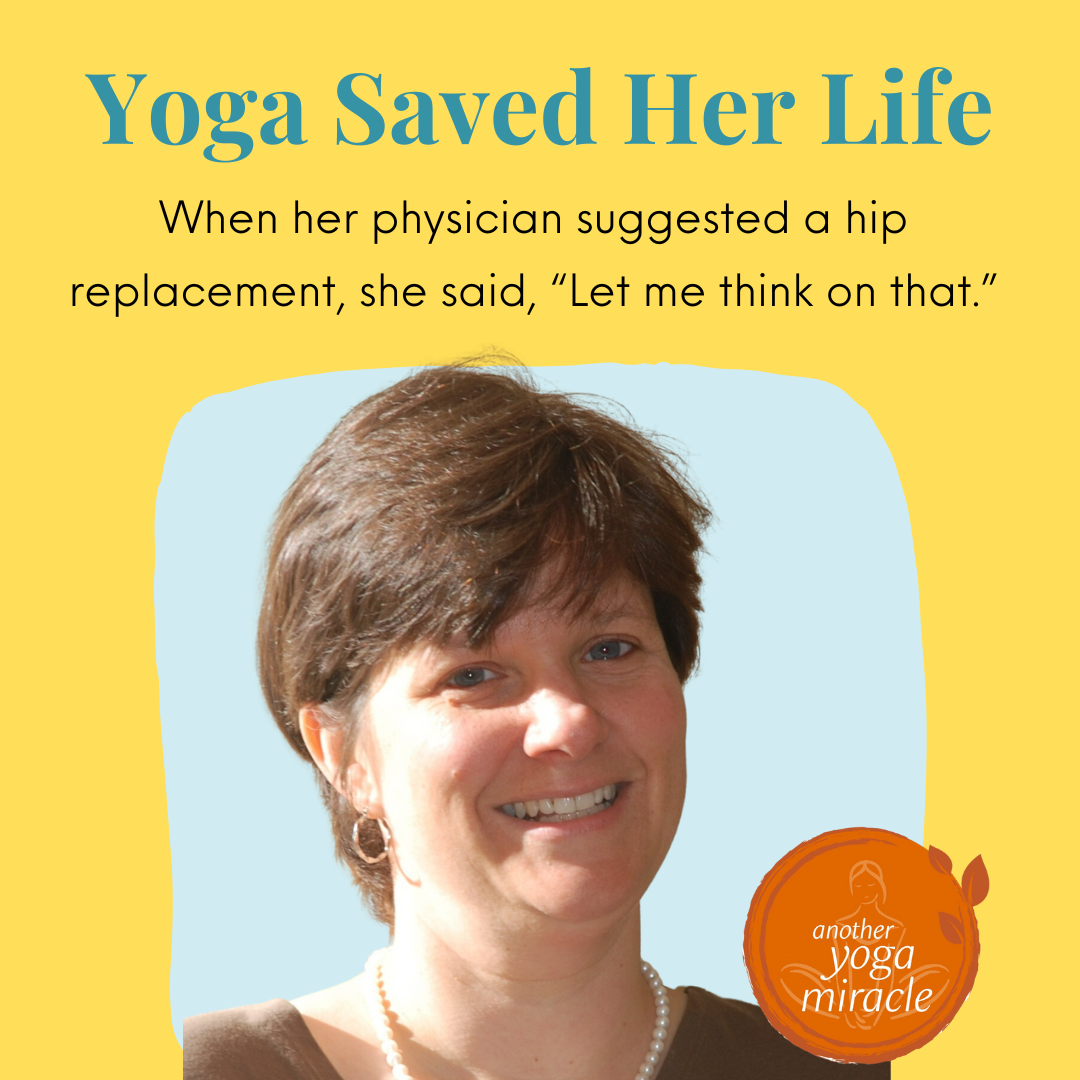
In 1972, in my early 30s, I had my first surgery to address complications of osteoarthritis.  Given my family’s health history, I was not surprised.  In the early 2000s, I had knee replacement surgery.  In 2011, when my physician suggested a hip replacement, I said, “Let me think on that.”

I’d taken yoga classes from Rebecca (Rasa) Rivers in a nearby town.  By 2011, she was teaching Svaroopa®yoga in my town, so I got in touch with her.  After an assessment, she suggested that I join her classes.  I also availed myself of her private sessions.  I received yoga therapy and private instruction on specific poses for my condition. 

When I saw my surgeon a year later, he said, “I don’t know what you did, but you no longer need hip surgery.”

Indeed, I was able to climb mountains again, walk three miles a day, and return to swimming.  Given the therapeutic effects of Svaroopa® yoga, I am so grateful and so happy to be alive.  

Since 10-years-old, I’ve been doing things that are positive for my body, including diet and exercise.  When I’ve walked through forests, their scent and vibrations have uplifted me.  I’m conscious now of the same sense of fulfillment from Svaroopa® yoga poses.

I have also become interested in learning more about yoga philosophy.  My original interest was focused on yoga’s physical benefits only.  Having recently completed a Learn to Mediate course, I am expanding my interests to yoga’s spiritual teachings as well as Svaroopa® Vidya meditation.

Seeing clients experience such profound change is one of the joys of my serving as a Svaroopa® yoga therapist.

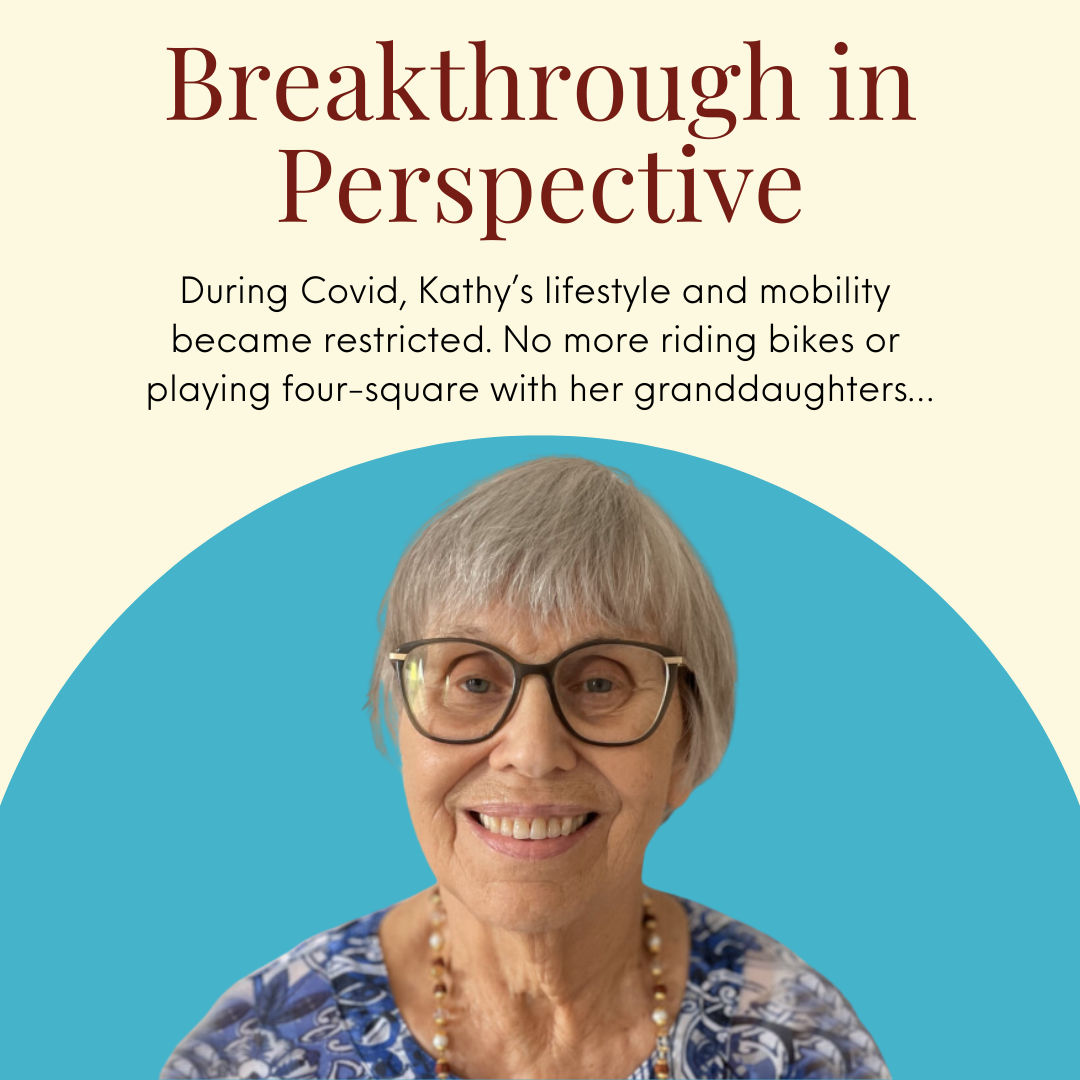
Breakthrough in Perspective

By Margie (Maitreyi) Wilsman

Beginning yoga in 2018, Kathy kept her right hand at her waist in Seated Side Stretch.  She needed to sit on the highest possible blanket stack.  In Alternate Leg Diagonal, her right leg couldn’t move to the diagonal angle.  In a yoga therapy session, she reported high pain levels in her right leg, knee and shoulder.

During Covid, Kathy’s lifestyle and mobility became restricted.  No more riding bikes or playing four-square with her granddaughters.  She could no longer even walk to the end of her driveway safely unless she used walking sticks.  

When I reopened my studio, Kathy immediately requested Overlap Healing, a series of yoga therapy sessions.  For the first time, I learned about her 2013 low back injury from doing a flip.  I asked to see her MRI report and used it to guide subsequent discussions and sessions.

In one session, I moved her slowly into the diagonal angle in Alternate Leg on her right side.  She felt tingling and pulsations in her hip crease and buzzing on the outside of her right knee.  She told me about losing bowel control.  I urged Kathy to see her primary physician and request a new MRI.  It revealed the need for a right hip replacement.  I supported her in pre-surgery toning per her physician’s handouts as well as Ujjayi Pranayama along with a few “safe” poses.

After hip replacement and PT, Kathy arrived at yoga without walking sticks.  She said, in addition to her new hip, she had gained new perspectives on her body and mind.  She’d thought exercise could correct any pains.  She could not believe how she’d denied and rejected her pain.  She had wanted to look strong to her family and friends.  She credits Svaroopa® yoga for teaching her effective body awareness.

In a conversation after class recently, she said she no longer pushes herself through injuries and pain.  She first does Ujjayi Pranayama, or comes to class or a therapy session.  Then she decides what to do next.

Trained as a Svaroopa® yoga therapist, I move clients through their own healing process as well as empower them to keep it moving.  To do this, I engage deeply in the Svaroopa® Sciences practices to stay based inside in the One Self Being All.  I know that all breakthroughs come from this inner source.  Hearing Kathy speak of her miraculous changes I said, “Thank you, Self.”

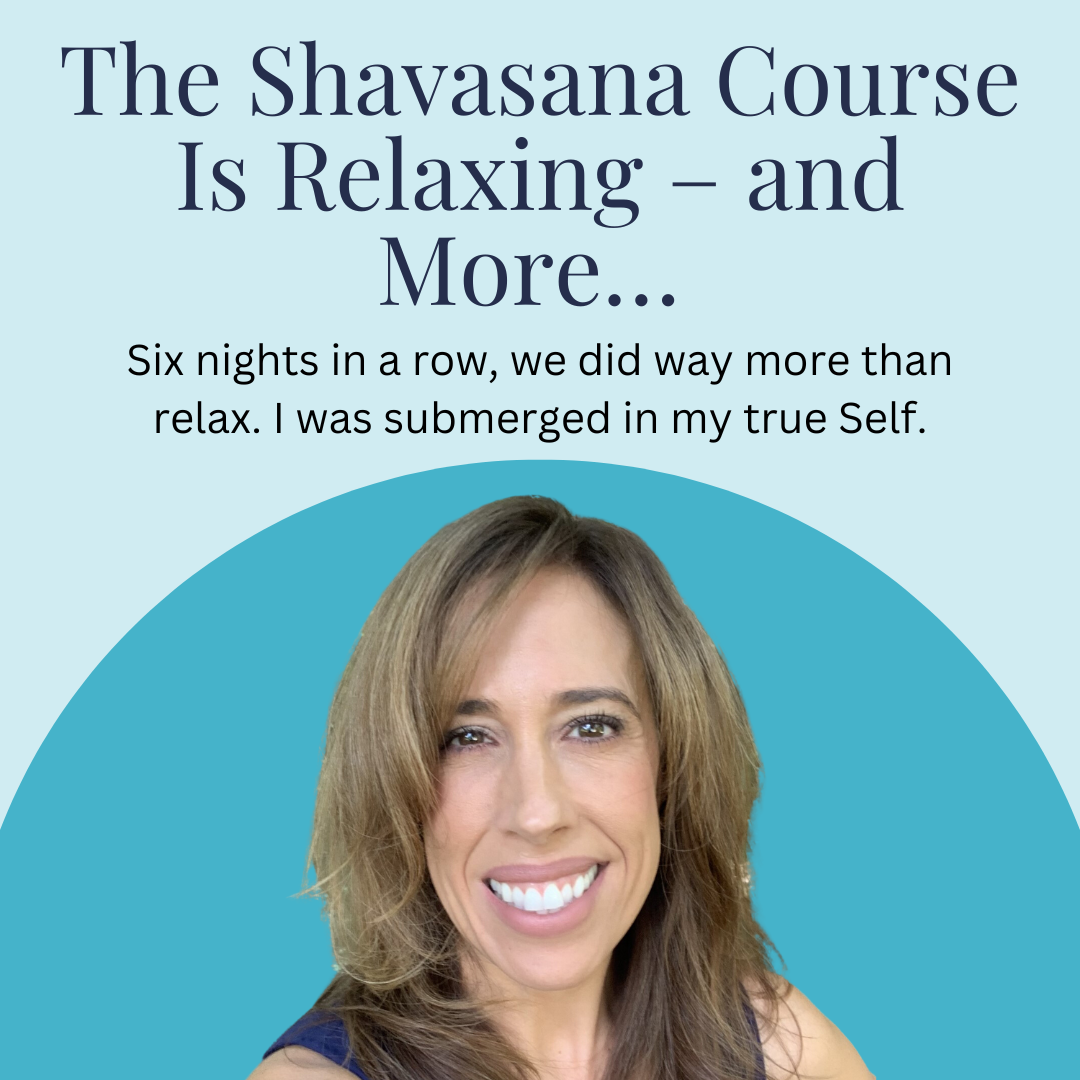
The Shavasana Course Is Relaxing – and More…

By Jessica Soligon

Interviewed by Lori (Priya) Kenney  

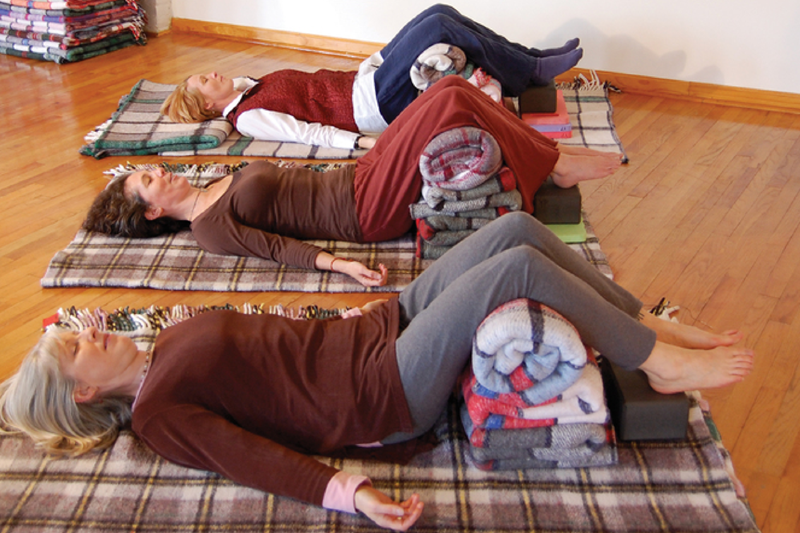
I love Shavasana.  My life can get very stressful, and relaxing can be a challenge.  If things are crazy and I have a half hour, I turn to Shavasana.  I play Gurudevi’s Shavasana track on my phone, lie down and relax.

Earlier this year, I took the Shavasana Course.  The first night, Swami Prajñananada asked each of us to say why we were in the class.  I said I hoped to be still and relax.  I thought the course would teach me to slow down, and I’d learn more about relaxation.  What I got wasn’t what I expected.  

Six nights in a row, we did way more than relax.  I was submerged in my true Self.  I felt very calm and connected to something bigger than myself.  Sometimes I went within so deeply that I lost awareness of Swami P’s voice.  Those two hours and a half every night were an amazing and transformative experience.  I’m so glad the course didn’t meet my expectations!  

I loved the course and looked forward to it every day.  On really stressful days, I was especially grateful to go home and let go of the stress.  No matter how I felt during the day, the evening session left me feeling so good.  Since taking the course, I am more confident.  I know what to do to get centered and be in my Self.   

Now I’m more connected with my personal journey.  I have a better understanding of myself as a yogi.  My practice has deepened.  I am more comfortable and can participate freely without overthinking. Before I was always trying to figure things out.  The Shavasana Course helped me trust the process more. 

My Favorite Pose

By Cayla (Mangala) Allen, Yogaratna

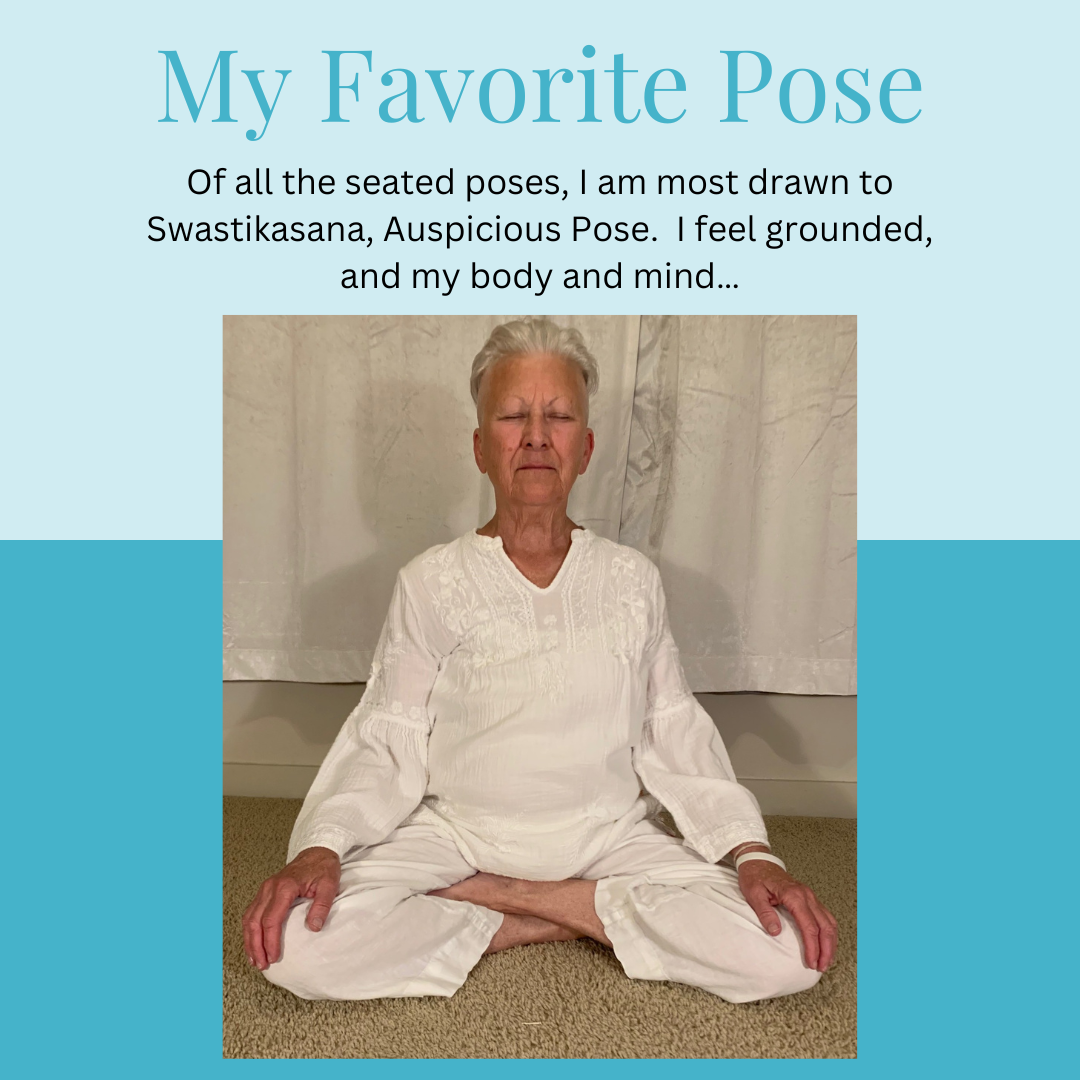
My favorite pose is a seated pose.  Asana means to sit.  I sit for meditation, the practice that gives me my Self.  Of all the seated poses, I am most drawn to Swastikasana, Auspicious Pose.  I feel grounded, and my body and mind come into balance.

I am settling into Swastikasana right now.  I closed my eyes for a moment and experienced the ease with which I become aware of who I am.  My eyes are open now.  In this moment, I know who I am.  I am Me, a unique expression of the One.  I am grateful for the gift my Guru has given me — Me!

Gurudevi has asked me to sit in Sukhasana with three blankets to address some tension (kyphosis) in my spine.  I heed her advice when I am sitting for meditation.  I also do so when seated for longer periods of time.  This is when I’m sitting at my Guru’s feet in retreats and trainings.  Yet I am drawn to Swastikasana. 

In YTT, we learn to have a “Sitting Pose” and a “Working Pose.”  My sitting pose is Sukhasana.  I am working toward Swastikasana.  When I sit in Swastikasana, I make sure to pull in a wedge (the edge of a folded blanket under my sitbones).  

I “level up” through my sitbones and notice my spine relaxing easily upright.  I ask myself, “Is the top of my head over my tailbone?”  It is.  

I widen across my collarbones, soften my shoulders, settle in and enjoy the soothing, calming benefits this pose offers me.  I dive deeper for a moment, or more.  Then I open my eyes, aware of this beautiful life and so much more…

Where Are You Going?

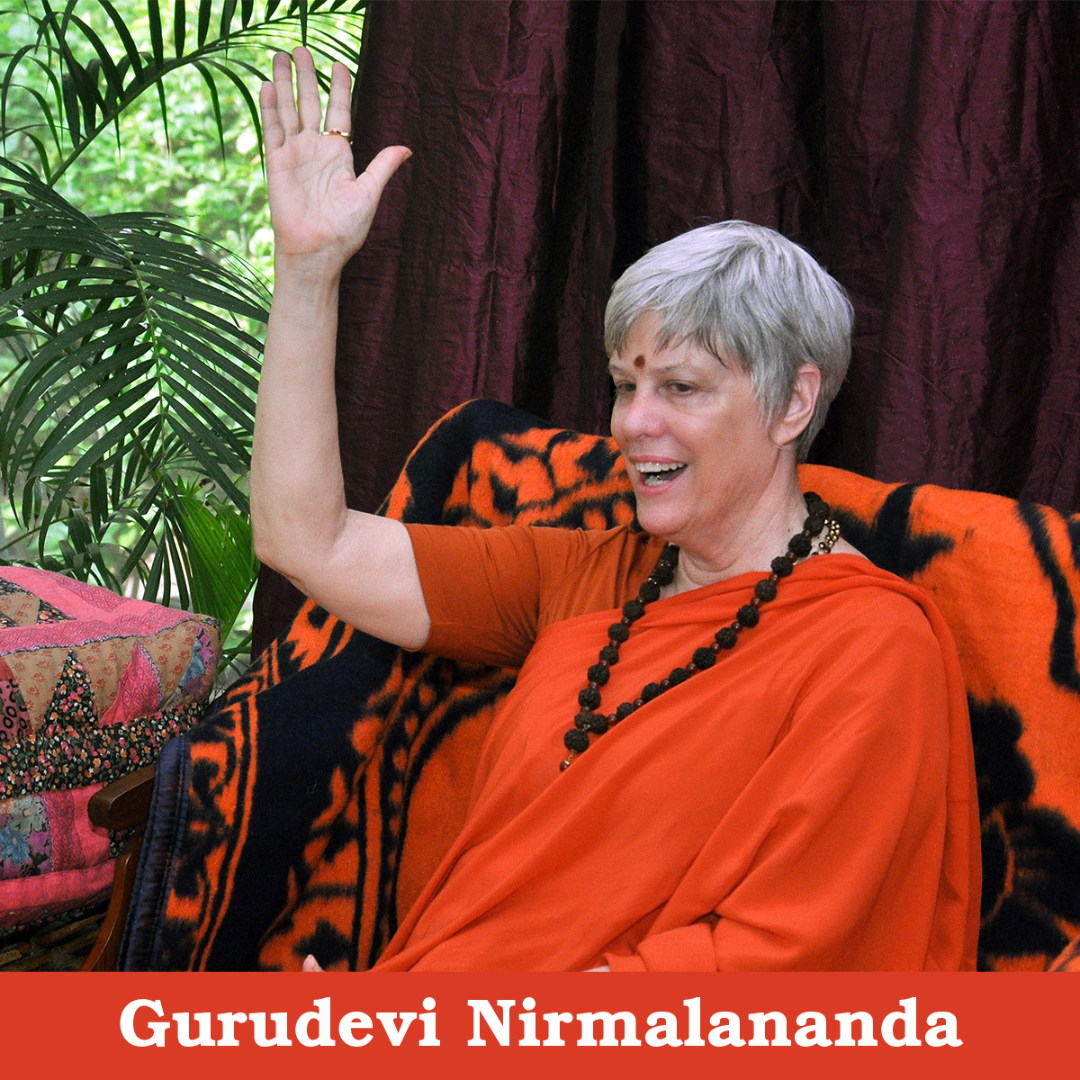
By Gurudevi Nirmalananda

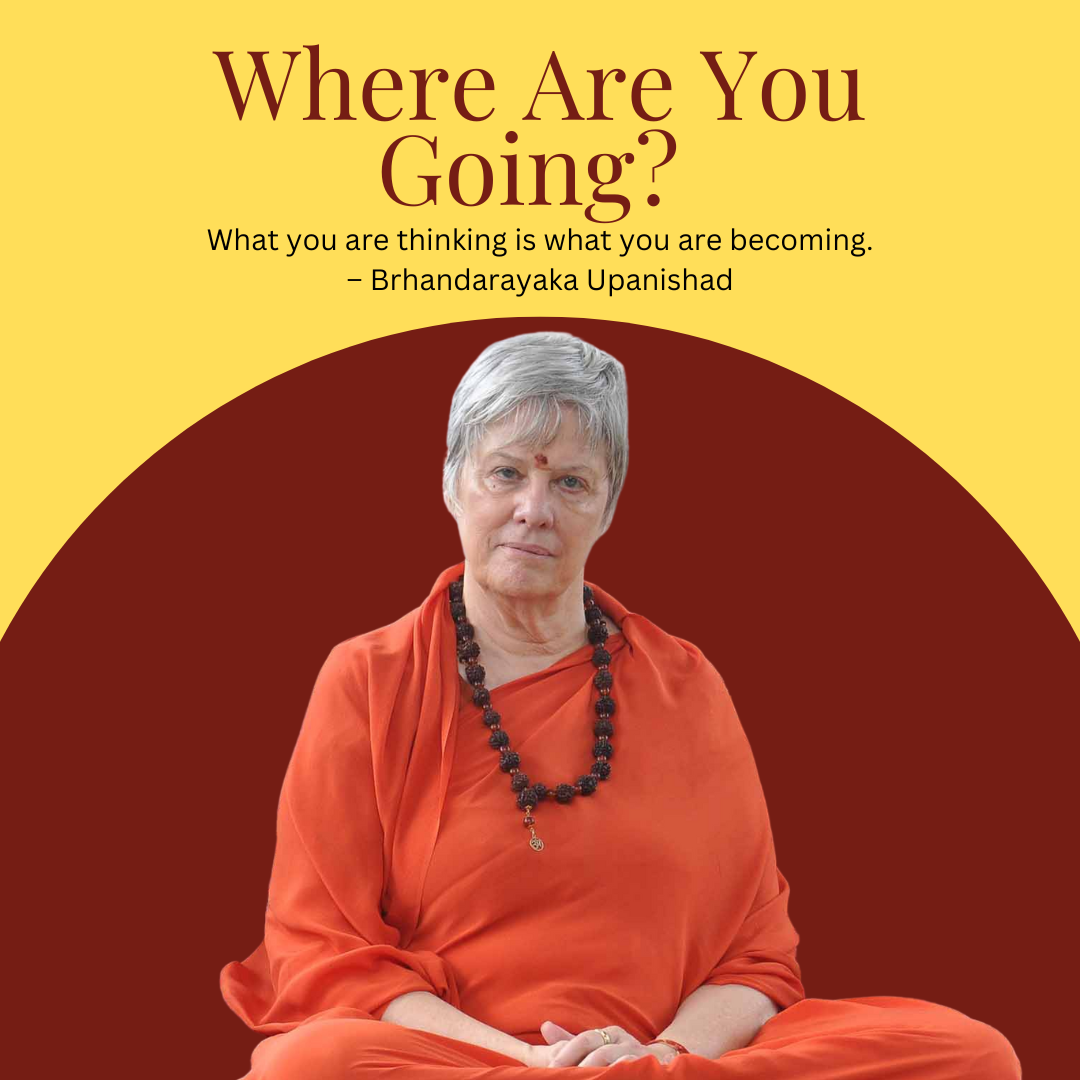
While I was growing up, the adults around me often asked, “What do you want to be when you grow up?” I always wanted to know, “What are my options?” They never suggested that I could get enlightened. I would like for you to know that this is one of your options, too.

The good news is that you don’t have to give up your other options while you’re working on enlightenment. You can have a home and family as well as your work and pastimes. Your actions are not what keep you from being enlightened. It’s what you think that holds you back.

Yet your actions do change as you begin to manage your mind more effectively. They become more uplifting and more altruistic. This is because anything you do is preceded by thoughts. The sages warned us about this around 3,000 years ago:

Whatever one thinks, that one does.

Tat vaachaa vadati, tat karmanaa karoti.

— Taittiriya Aranyaka 1.23.1

Where is your mind taking you? If you want different results than you’ve been getting, simply steer your mind differently. It’s easy to get motivated to do this, as using your mind the way have been means you get the results you’ve been getting. The bottom-line question is…

Your Mind’s True Capacity

By Gurudevi Nirmalananda 

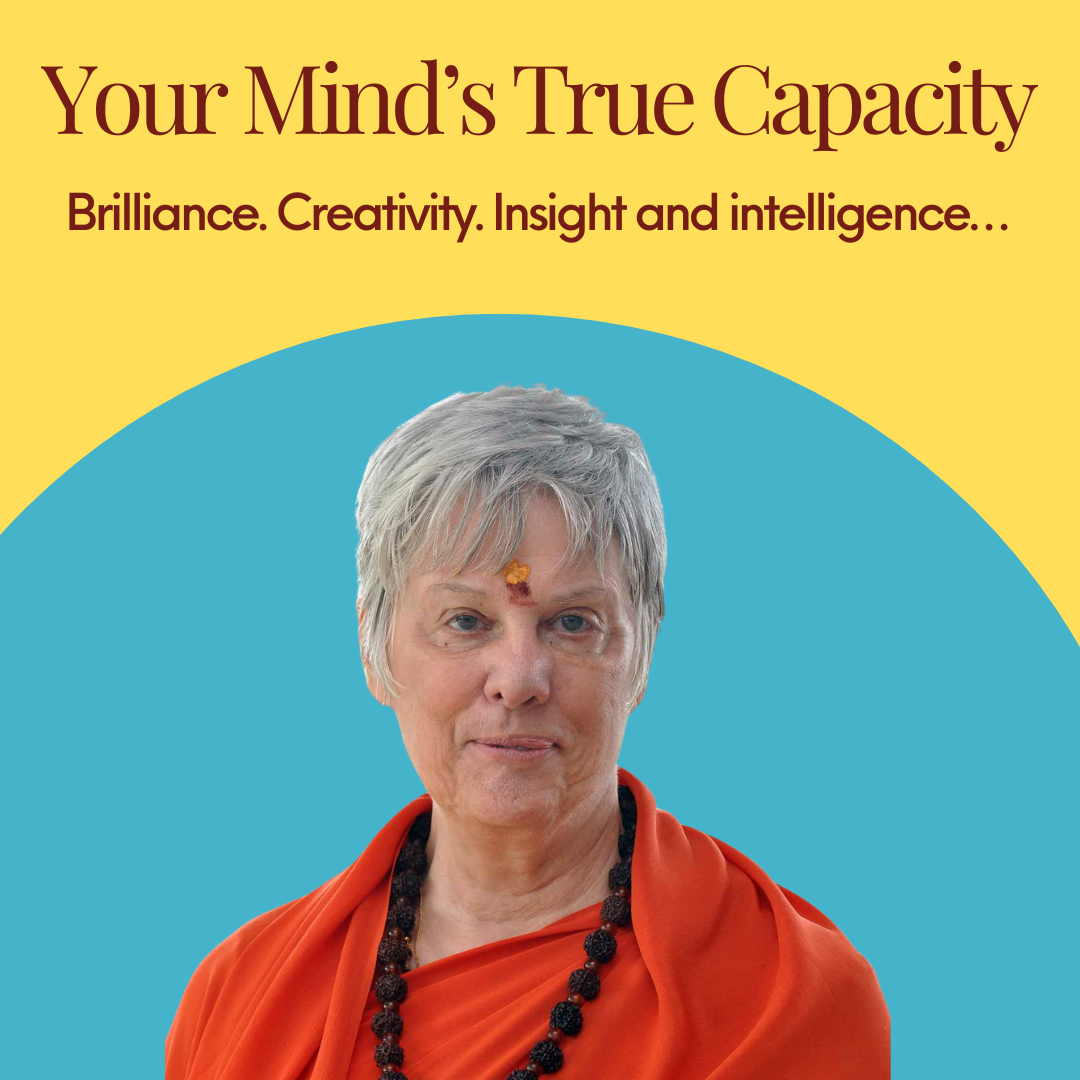
Brilliance.  Creativity.  Insight and intelligence. Generosity and boundless love.  Compassion, strength, fortitude – these go together, for you cannot act on your compassion unless you also bring strength and fortitude with you.  Your mind is capable of all this and more.  

You currently use such a small portion of your true capacity that I call it “puny little mind.” This is a trap you can end up living in for lifetimes, as it is baited with sensory delights.

Every athlete knows to restrain their appetites before a competition.  They refrain from intoxicants and sexuality plus they carefully regulate their sleep and food.  This is true of chess players as well.  If you want to get optimum results from the use of your body and mind, you need to take care of them, like you would with any other type of equipment.

For those who wear eyeglasses, you have to clean them regularly.  If you wait too long, you don’t realize that you’re living in a grey and blurry world until you do clean them.  Then you put them back on and wow!  The world is so bright!  And so beautiful!

The yogic sages say that it is not merely your glasses that need cleaning…

What Kind of Karma?

By Gurudevi Nirmalananda

No one talks about their karma when life is flowing smoothly, when finances fall together and they’re getting what they want. That’s called “good karma.” But you may complain when things are falling apart and life is hard. That’s called “bad karma.” However, complaining about it does not help. You already know this. It’s like complaining about the weather. No matter what you say, it is what it is.

Where I live, the weather blows in from the Arctic or the Caribbean, sometimes from the Great Plains. Whatever blows through, all I can do is manage myself in the midst of it. Rain gear, snow gear, summery clothes and sunscreen – all are in my repertoire and in my closet.

Similarly, your karma is coming from somewhere – maybe things you did yesterday or last week, perhaps from decades or lifetimes ago. In meditation, I‘ve had clear memories of being a Greek soldier in a prior life. Karma can be nasty stuff! But it’s only if you did nasty stuff in the past. And we all have.

You have also done good things. Big stuff and even little stuff matters. Sometimes when I’m driving, I…

Words Matter

By Gurudevi Nirmalananda 

What you say to others affects them, as you already know.  But your words affect you as well.  When you are harsh to someone, you have the experience of being harsh or mean. It does not contribute to your happiness. Worse, you end up treating yourself the same way you treated them.  What is the tone of voice you use on yourself inside your head? 

It also works the other way around.  What you say to yourself affects you, no surprise.  But it affects others as well.  Even if you never tell anyone what you’re saying to yourself, it affects your facial expression, your breathing, your skin tone and your response to them.  It shows.  Worse, your brain chemicals are affected, along with your digestion and immune system.

Words matter.  The sutras tell us that words underlie the structure of the universe.  In other words, the universe is made out of God’s thoughts.  God thought you into being, along with everyone and everything else.  That Divine impulse underlying everything that exists is described in this sutra:

J~naanaa-dhishthaana.m maat.rkaa. – Shiva Sutras 1.4

The experience of limited individuality comes from the cosmic vibrations that produce sounds and the words they become.

The cosmic vibration is OM, aka the primordial sound.  This is the vibration of the One Divine Reality, vibrating within himself. In yoga, we call the One by the name Shiva, meaning Beingness.  When Shiva is vibrating, we call the vibration by the name Shakti, meaning Divine Energy.

So we have Divine Beingness vibrating within his own Beingness.  You can perceive this vibration as a subtle sound which pervades all that exists, for everything that exists comes from it.  This vibration is the Divine Energy that condenses down into matter.

We approximate this sound when we chant OM.  We come close, however we have to stop and breathe periodically.  OM continues without interruption. Shiva delights in being the vibration that is being the OM.  And Shiva decides to play some variations on the theme, much like a jazz musician does.  

Thus the one sound becomes multiple sounds, each one with a different vibratory energy.  These different sounds are called “bij mantras,” the root sounds that are the syllables which combine to become words.  Then you use the words to tie yourself up into knots.

The words you use on yourself matter.  They matter the most, for you wouldn’t use words on other people unless you first ran them through your mind.  Ah, your mind! It needs some help.  Fortunately, all of yoga’s practices are for your mind.

Here are two practices to help with your words.  They are a great beginning point for working with your mind:

 1. Speak only truth.  This is satya, the second of yoga’s lifestyle practices (yamas).  In this practice, all your words must be truthful, while they are also non-harming (ahimsa, the first yama).   

I’ll rephrase it.  Maybe your mother told you this, “If you can’t say something nice, don’t say anything at all.”  Even if your negative reaction is true, don’t say it if it is hurtful.  Or find a way to say it that can be helpful, even contributing to an improvement in the situation or the relationship. 

Yes, this is a big deal.  It means you’re thinking before you speak, and you’re assessing the value of the words you’re about to use.  You’re starting to live more consciously.  It’s a process and you’ve decided to work on it. 

Not only will it improve your life and relationships, it will improve your internal environment.  That’s the most important result. 

2. A more powerful option is to pour your mental energy into mantra. First you have to get a mantra from an authorized teacher. Getting a mantra from a book or website is like eating a picture of lasagna. You won’t get filled up that way.

But when you get an enlivened mantra, something happens on a whole different level. I know because it happened to me and because I see it happening for people every time I teach. The enlivened mantra dials up your level of Consciousness inside.

It’s like you’ve got your hand on a rheostat, a light switch that lets you dim and brighten the lights. Except it is happening inside.

When you repeat your mantra, the light of your own Beingness gets brighter inside. Now your mind functions in a whole new way. Compassion and generosity arise from within, as well as the desire to help others. You’re on your way to living an illuminated life.

1000-Fold Return on Investment 

By Karen (Kumuda) Schaub 

Interviewed by Agnes (Aikyaa) Hetherington 

Winter of 2022 was a challenging time for me.  My stress level was through the roof.  I was a first-year public school teacher, commuting more than two hours daily.  In icy conditions, I nearly fell three times, which strained my already “crunchy” left hip. 

In March I had a more serious fall.  I went headfirst down the steps outside my condo.  I had very intense and painful bruising on my shins and knees.  It also aggravated my hip pain. 

In acute pain, I went to school as usual the next day.  After a week of homeopathy, herbs and acupuncture, I realized more help was needed.  My old hip problem had already impaired my ability to bend forward.  Now my knees were stiff and swollen. 

I worried about regaining my mobility.  I was scared about the amount of pain and concerned about blood clots with the intense bruising.  So I began weekly Embodyment® therapy sessions with my Svaroopa® yoga teacher, Kris Curran. 

The weekly sessions helped start my healing process.  Most of the swelling and bruising subsided over the next three months.  Attending a retreat at Lokananda in July however, I had to use the stairlift to get to the second floor.  I was not yet back to normal movement. 

I remembered Kris had mentioned Overlap Healing.  This Embodyment® modality “overlaps” sessions to allow for staying open and deep healing.  It was a large commitment of time and money, but I decided to make that commitment. 

For three weeks in August, I immersed in nine Overlap Embodyment® sessions.  The healing was profound and so was the opening in my body.  It was a miracle.  My pain and mobility issues diminished by 95 percent! 

I marvel at being able to walk my dog outside and not be in pain now.  Equally important was the effect on my mind.  Embodyment® allowed me to turn off my mind and settle in.  It stopped all that fear process — nipped it in the bud! 

I will do it again, on summer break from teaching, no questions asked.  It’s a big commitment, but the return on investment is one thousand-fold! 

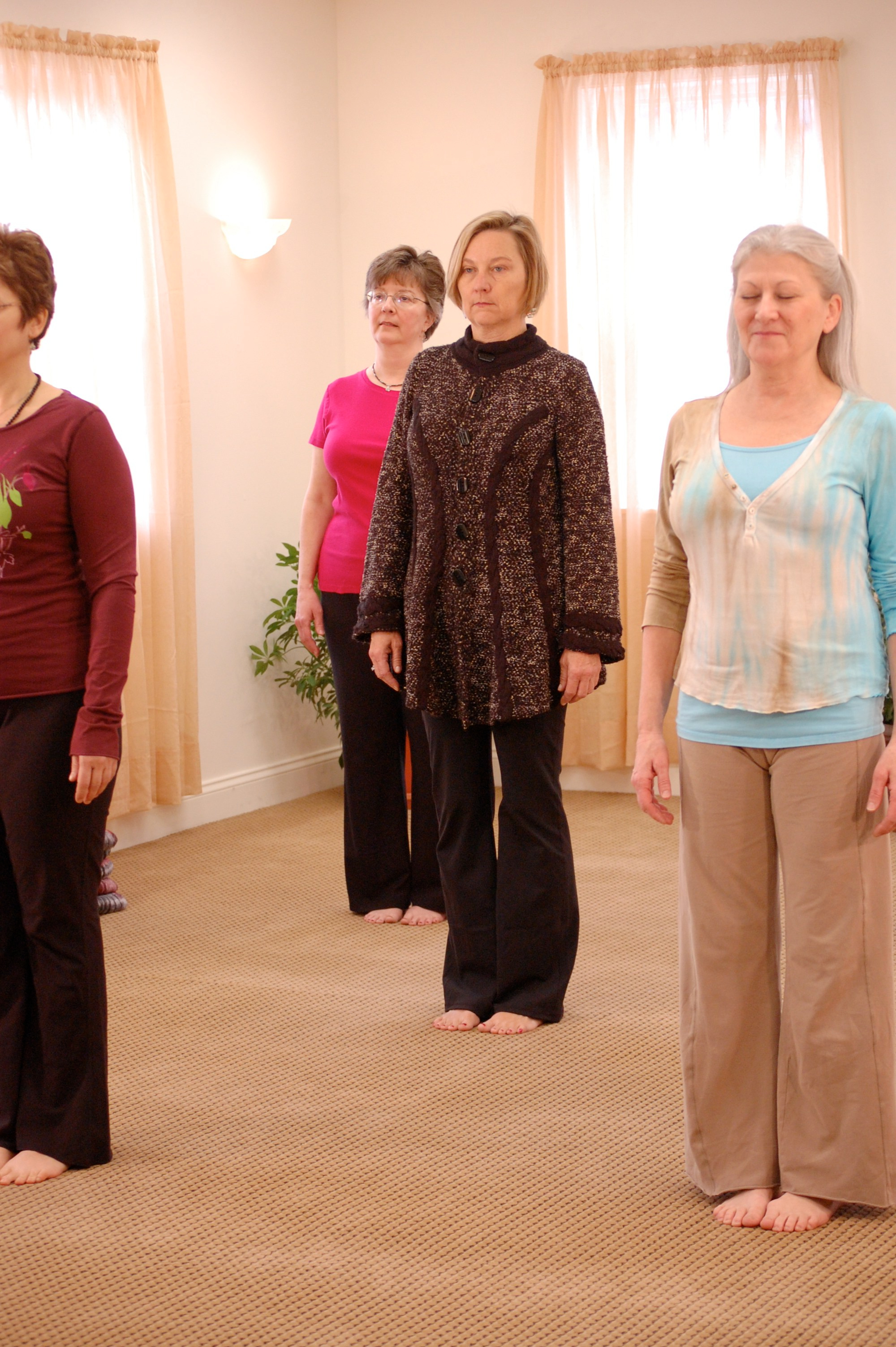
Tadasana

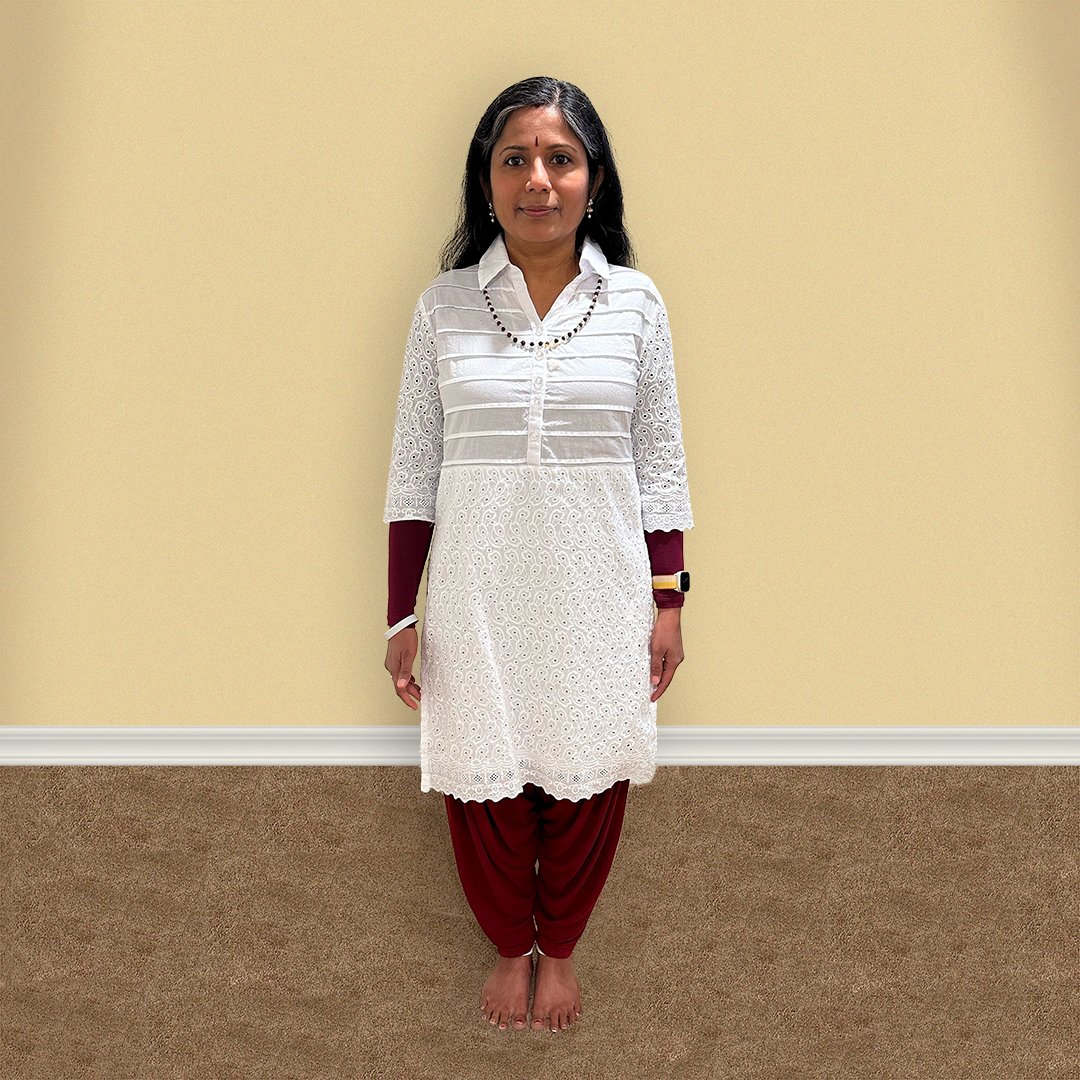
By Nirooshita Sethuram, Yogaratna 

I was born into a Hindu family in Sri Lanka.  Standing is a most important posture for our family, especially for cultural and religious events.  Often, we stand barefoot on the floor or on a mat.  It depends on what is required and the ceremony that we are attending.  And we must stand for hours at times! 

So, naturally, I thought I was very comfortable standing anywhere at any place.  This was until I found Svaroopa® yoga and learned how to stand.  That’s when Tadasana became my favorite pose.  Tadasana taught me how to stand with ease settling into my own Self deeply while standing. 

Most of us tighten our spine when we stand.  How long can you stand without tightening your spine?  In Svaroopa® yoga, I found the answer to this question.  Yes, in Tadasana I accomplished standing without tightening my spine for however long is needed. 

Tadasana also helped me develop the correct standing posture to stand in my daily life.  I learned to improve the way I use my legs and feet.  I learned how to lean into my bones.  Learning how to lean weight into bone.  Now I stand using my bones.  This strengthens my legs, because as you lean weight into a bone, it gets thicker and stronger.  When you hold yourself up with muscles, especially spinal muscles, you are not leaning into your bones.   

Standing in Tadasana allows my weight to lean through my leg bones, into the bones of my feet, and through my feet into the floor.  This activates my arches. In this way, leaning into my bones not only preserves and increases their strength.  This also gives me a feeling of being grounded.  It makes me able to apply that to everything else I do. 

I’ve also learned to distribute my weight evenly on both of my feet.  This helps my balance (physical, mental and emotional) as well as stamina.  In this way, I’m able to take yoga into the midst of my life. 

Oh! I must also mention getting taller and lighter by standing in Tadasana. When I carefully align myself, I truly experience Tadasana as the “standing version” of Shavasana.  The name says it all: Tadasana = Tat + asana = Pose of “That” (the Supreme Reality).  Standing in Tadasana and settling with ease gives me the experience of the Self!  I stand in the deeper dimensions of my own Beingness, which is who I really am. 

As always, I grateful to my Guru, Swami Nirmalananda Saraswati.  We lovingly call her Gurudevi for giving us the practices and poses.  They reliably give us the experiences they describe.  How blessed am I to learn and experience these ancient methodologies by a modern living Guru such as Gurudevi Ji!