
 By Bindu Shortt
Right now, in the northern regions of the northern hemisphere, leaves are falling, fields going dormant, temperatures dropping, and animals storing up food or flying south. Nature is preparing for the coming winter. Fall, a time of transition, has a certain quiet.  Ayurvedically we are moving into vata season. Vata means “wind.” It is the element of nature that brings the qualities of cold, light, dry, rough and irregular. Vata comprises the energies of air and of the ether (space). Thus, vata can bring a sense of void.
Whatever seasonal qualities are outside you, those same qualities will accumulate inside you during that season. This may lead to health imbalances. In vata season they can show up as colds, influenza, constipation, dry skin, or sleep disturbances. For each season, Ayurveda recommends routines to help you not accumulate too much of its seasonal energies. Working on the principle that the opposite is balancing, Ayurveda offers lifestyle suggestions to keep you well through fall and winter. Much of this may be fairly obvious or automatic for you. This is because your Ayurvedic inner wisdom is always informing you of how to stay well!
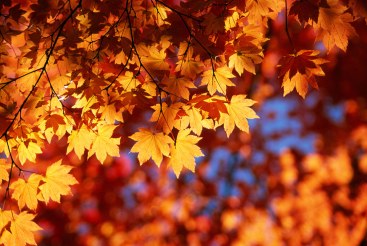 First, notice the changes in nature where you live. When it is cold, dry and windy, give yourself warmth, oiliness and stability. It is natural to eat more winter squashes, and root veggies such as beets and carrots and parsnips. All of these build warmth in your body. Include them in your daily diet, rather than the melons and salads of summer, which cooled you.
Eat cooked foods. Hot grain cereals for breakfast are warming and grounding. Soups, stews or casseroles for lunch and dinner will help keep your immunity strong. Nuts and seeds have wonderful protein and fats, both of which will stabilize your blood sugar.
Pies are great desserts at this time of year. Pies with cooked fruits or even veggies warm you up (like pumpkin or squash pie). Favor the sweet, sour and salty tastes. Add more ghee and other fats and oils to your diet. Drink more warm liquids, such as teas.
You can make a wonderful vata supportive tea. Put a half teaspoon each of whole cumin, coriander and fennel seeds in a cup. You can put them right in or use a teaball. Pour boiled water over, and let it steep for a few minutes. If the seeds are floating, strain them. This tea is good for digestion, detoxing, immunity, calmness and clear thinking.
 Consider adding oils on the outside of your body, by doing a daily oil massage before you shower or bathe. This practice, called abhyanga, will go a long way toward keeping you warm, soothing your nervous system, and moistening your skin. An oil massage also moves your lymph, for a detox. In vata season, sesame is the oil of choice for most people, as it has the most warming qualities. Searching online using “Ayurvedic self-massage video” yields more than a hundred hits! Click here for an example.
By making lifestyle changes into habits, you align yourself with the rhythms of the season. This will help you to enjoy the abundance and harmony of fall and winter. In addition to a vata-calming diet and oil massage, you can wear a light scarf to help hold your body warmth as well as a hat that covers your ears. And give yourself regular sleep. Go to bed by 10 pm and be up by 6 am.
 Reported by Matrika Gast
 “A new student came to class with so much pain in her hip that she could hardly manage stairs,” reports Kamala (Michelle) Gross, Certified Svaroopa® Yoga Teacher (CSYT) and Yoga Therapist. “She was even was in pain while she slept. Lying in Jathara Parivrttanasana (Rotated Stomach Pose) with her knees touching, one foot hung in the air due to the severe twist in her hips. I supported it on a large blanket roll. After a few classes, she began yoga therapy private sessions weekly. Just two months later, her feet rested together in Rotated Stomach Pose due to the realignment in her spine and hips. After a year of committed yoga practice and weekly sessions, she was climbing stairs nearly pain free, aware only of an occasional, minor hip ache. Her whole body was more upright and comfortable.”
 A student of Jyoti (Rebecca) Yacobi, CSYT took Svaroopa® yoga classes for two years, had several Embodyment® sessions and committed to a daily Magic 4 and Ujjayi home practice. Jyoti reports that these approaches “significantly improved mobility in her lower spine. The tightness and pain in her sacrum is gone.”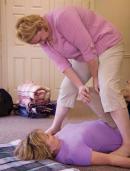

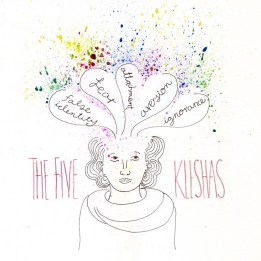 For example, I bought a new phone last week. It was a desire (raga) fulfilled. However, it turned out to be quite painful as it did not work in the way I expected. It meant I had to deal with the service provider and the store I purchased the phone from. Fear (abhinivesha) and aversion (dvesha) raised their heads, as I had to somehow get to grips with the technology. This threatened my identity (asmitaa) as an intelligent, educated person. Would I be smart enough to understand what was going on? Would I be able to resolve the problem? In other words, was I going to be “good enough?”
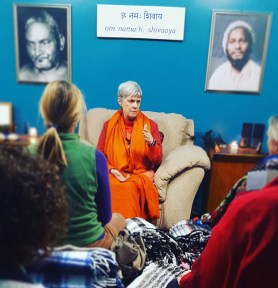 I also find it comforting to understand that it is not my fault, because avidyaa (the not-knowing) is the human condition; it is built in existential angst. I cannot think my way out of it and I need help. For this I have so many Svaroopa® yoga and meditation practices to choose from. They support me in growing closer to vidya (the knowing of my own Self). They address my spiritual amnesia.
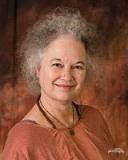 By Aanandi Ross
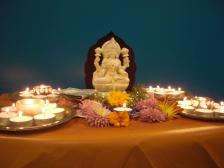 The celebration dates back to ancient India as a festival after the summer harvest. It honors the sun as the cosmic giver of light and energy to all life. Derived from the Sanskrit dipam “light, lamp” and oli “glow of light,” “diwali” comes from dipavali, which means “series of lights.” For some, the festival preparations and rituals extend over a five-day period.
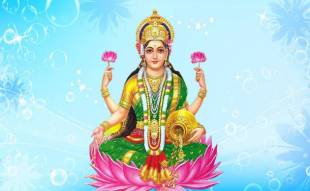 As a Hindu celebration, Diwali is a holy day. Celebrations honor Lakshmi, the goddess of abundance at harvest time, who provides us with our stockpiles of food during the dormancy of nature, and who will bring forth spring’s flowering and fructification of nourishment. She is thus the Goddess of wealth. Hindus prepare by cleaning their homes and setting out lights — clay saucers of ghee with a wick, everywhere, outside and inside. New clothes are worn, pujas are decorated with flowers, prayers are offered. Sweets and dried fruits are enjoyed. The senses are employed to attune one to the presence of God.
 For us yogis, Diwali is a special time to honor the light of your own Self. We also honor the one who makes you able to know your Self, the Guru. Along with festivities, rituals can include a self-oil-massage specially prepared with herbs, bathing afterwards, and dressing in new clothes. Along with lights, sparklers and fireworks, look for the experience of Lakshmi’s power inside, bursting into bloom, dispelling darkness, and invoking an inner experience of being all the throb of life.
 “What I like about the Yoga Therapy Retreat is that it includes everything for healing,” says Kalyani (Evy) Zavolas Wallis. Rest and rejuvenation, healing, big openings, deep inner work and calming physical kriyas describe her experience. It feels like she hits the reset button and gets re-established in a steady practice routine. She says, “I feel so blessed to be able take this time for myself to do the inner work and to have time with Swamiji.”
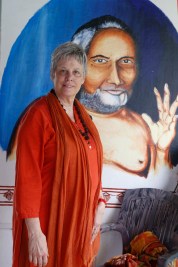 Kalyani has gone to the retreat all three times it has been offered at Lokananda! She keeps taking this intensive because she has had such good experiences. Kalyani remembers taking a similar course at the Malvern PA studio way back before Swami Nirmalananda was a swami. It included daily vichara and yoga therapy sessions. She was incredibly grateful to get two yoga therapy sessions from Swamiji when she was still called Rama. “She was doing things I had never seen before,” said Kalyani. She was so happy to see the ATT Yoga Therapy trainings reintroduced in the past couple of years, with even more juice to it. “I see there is one coming up in November,” says Kalyani. “If I can swing it, I will be there. It’s another five days of diving deep inside. I would like to take every single one.”
 Kalyani’s husband joined her at the next Yoga Therapy Retreat. He especially liked all the yoga therapy sessions. Even for someone who isn’t into the chanting, he was still able to enjoy it and didn’t find it overwhelming. Swamiji and Vidyadevi each gave illuminating talks that included information about the body, pain and the power of Ujjayi Pranayama. Students learned about the importance both their physical and subtle bodies in healing.
 SVA Blog