Category Archives: Yoga in Life

Finding Your Peace

By Gurudevi Nirmalananda

When I moved into my first home, I wanted to make it a haven from the world. I decorated my small apartment with beautiful budget items and hand-me-downs, and I kept fresh flowers in vases as often as I could. I carefully selected background music that created a soothing and peaceful effect. 

Sometimes it worked and sometimes it didn’t. I found that I was completely capable of being so overwrought that I didn’t notice any of it. Jon Kabat-Zinn named the phenomenon in a book title, Wherever You Go, There You Are. You take yourself with you no matter where you are. 

There is an important problem hidden in my story. If you want your home to be a haven, you actually see the world as being a hostile place. It may be an unrecognized attitude, but it is there. As you become able to recognize this in yourself, you also see how your attitude creates the problems that you encounter as you go through your life. 

I would love to be able to point my finger and blame the rude sales clerk or the belligerent driver. Yet, I know that I have created it, countless times, by my own actions and attitude. The world is a mirror. It reflects you back to yourself. What you put out comes back to you, the way you put it out and the “why” you put it out. 

As a yogi, however, you must look at even a deeper level, called dependency. You depend on the externals to be just right before you can feel peace. What happens to you if your neighbors have a noisy party? With all your doors and windows closed, you can still hear their happy sound. Are you happy that they are happy, or do you…

  — Excerpt from Yoga: Inside & Outside, pages 1‒2

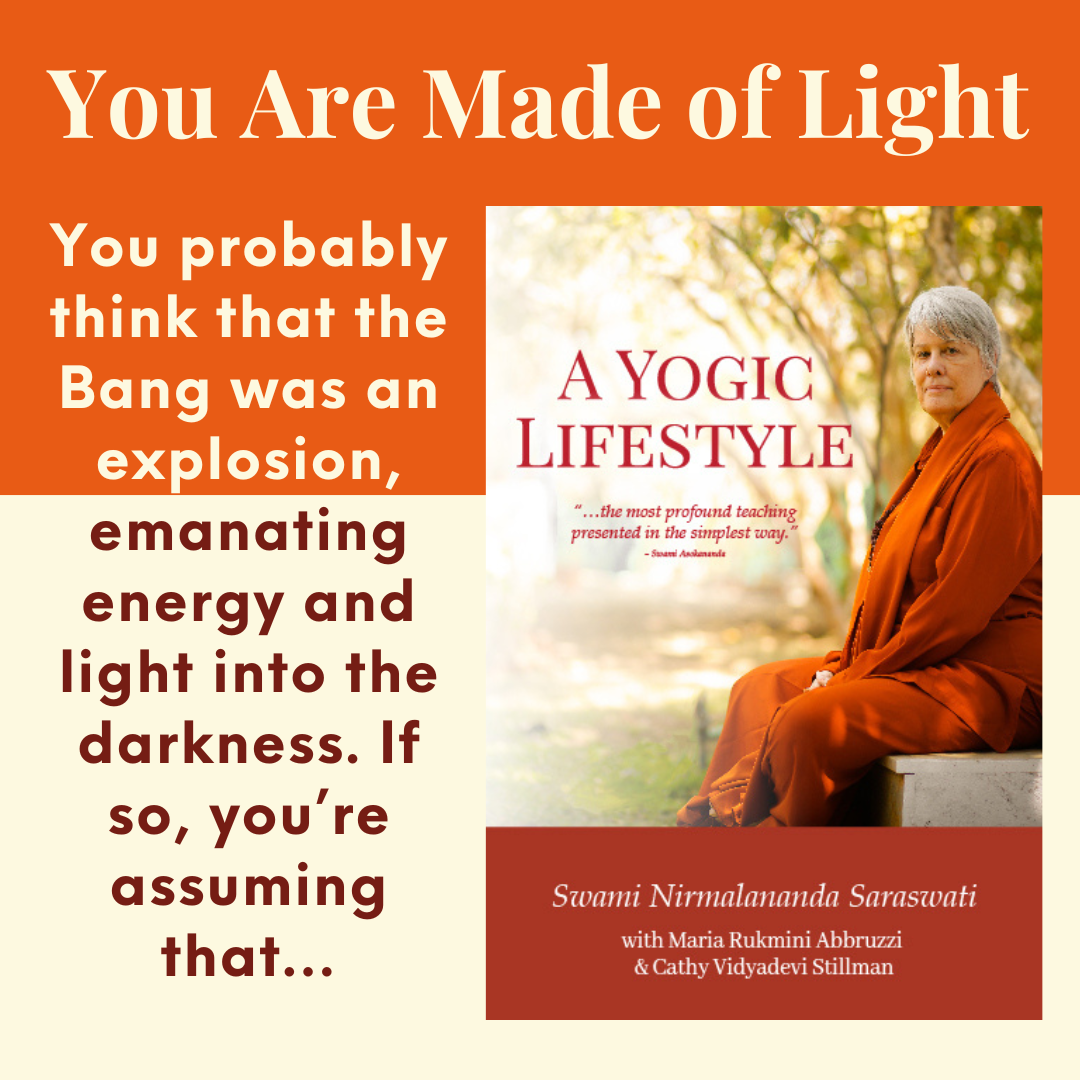
You Are Made of Light

By Gurudevi Nirmalananda

The physicists and yogis agree that it all began with the Big Bang. That bang emanated energy which became light; the light coalesced into matter. This is a vastly simplified explanation, but it is true — everything is made of solidified light. Even your body is made of light. Even the chair that you are sitting on is made of light. 

You probably think that the Bang was an explosion emanating energy and light into the darkness. If so, you’re assuming that darkness is the basis of existence, with light being added to it. The physicists do not describe it this way, but most non-physicists picture it so, without even recognizing that they do. 

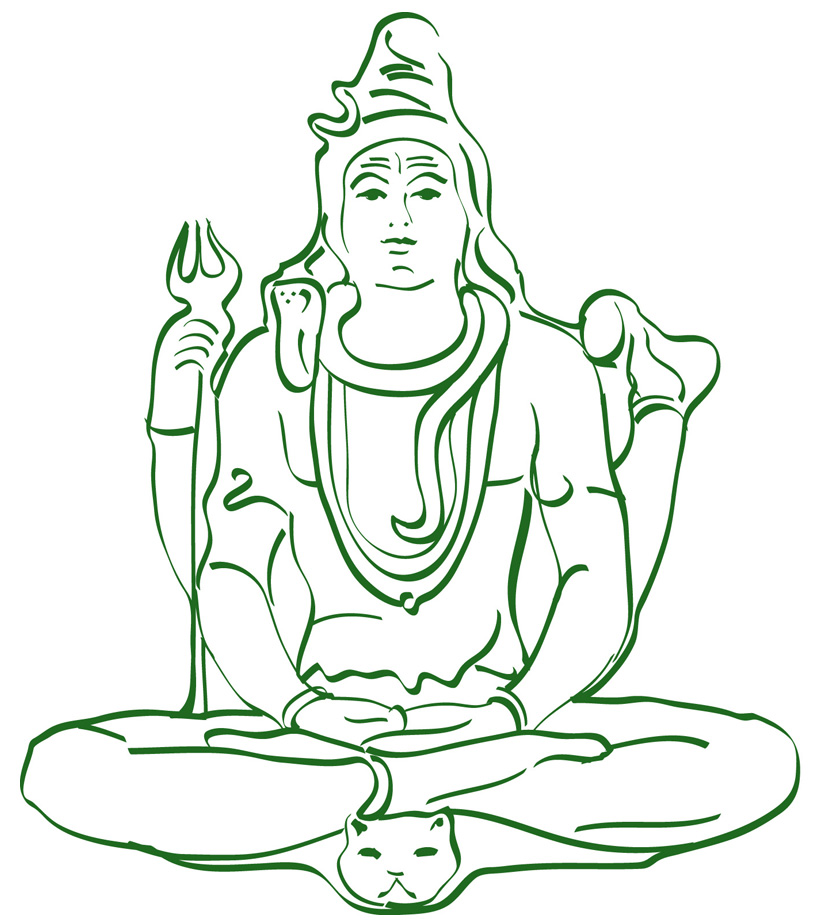
The yogic sages make it clear that something existed before the Big Bang. There was something there, a something that banged. That something was not, and is not, darkness. That “something” is the Ever-Existent Reality. It was and is Self-Knowing Beingness, also called Consciousness-Itself. Named by the ancients in their language (Sanskrit), that something is called Shiva. 

Shiva is light, but the word “light” has multiple meanings. Normally it means (1) the opposite of dark, or (2) the opposite of heavy. Both are true of Shiva but, in yoga, “light” means something else: scintillating Presence, radiant Beingness-Itself, Consciousness-Itself, That which Banged. The most important thing to know is — You are That. You are that light, that Presence, that Beingness and Consciousness. You are that which the ancient yogis called “That.” 

The Big Bang was an implosion within Shiva’s own being, which is why energy contracts to become matter. The Big Bang was not an explosion, with light expanding into a field of darkness. It was an implosion, with Shiva contracting within Shiva’s own being, to contract light into matter and bring the universe into existence. Light — not darkness — is the basis of existence. 

Light is important to you because you are made of light. You already know this, not because of a scientific theory or an ancient teaching, as inspiring as they can be. You know this because of your own experience. You feel most like yourself when you are shining with light. When your eyes twinkle, when your heart overflows, when your words have a melody hidden in them, and when your actions show your generous and loving nature — you feel so natural. You feel like yourself. You are radiant with light in those moments. You are your own Self. 

Yoga offers a tried-and-true methodology by which you stop blocking the light of your own being from shining through. When you begin with the physical practices, you are removing the blocks to your body’s natural state of openness. Your body is naturally soft, supple, strong, healthy and resilient, like that of a two-year-old child. The tensions you’ve accumulated since you were two years old are blockages to be removed. When you do some slow breathing and poses to open your spine, you glow afterward. Because the things you do daily are the most powerful, you need to do your yoga breathing and poses daily. If you aren’t removing the blocks, then you are probably installing more of them. 

Yet you do not have to perfect your body in order to have your inner light shine. Even if your body is imperfect, your eyes can shine and your heart can overflow. Yoga’s most powerful effects are the clearing of the blockages from more important levels — your mind and emotions. Clearing these blocks is the primary purpose of yoga’s practices, so your inner light can shine through your mind. 

When you begin aligning your life with the principles of light by following yoga’s precepts for living, that glow shines more brightly and more consistently. When you deepen your inner experience through meditation and chanting, as well as by studying the teachings, you plumb the depths of your own inner essence to discover the source of light within, the light of which you are made.

— Excerpt from A Yogic Lifestyle, pages 25‒25

Shavasana: Letting Go to Go Forward

By Marlene (Matrikaa) Gast, Yogaratna

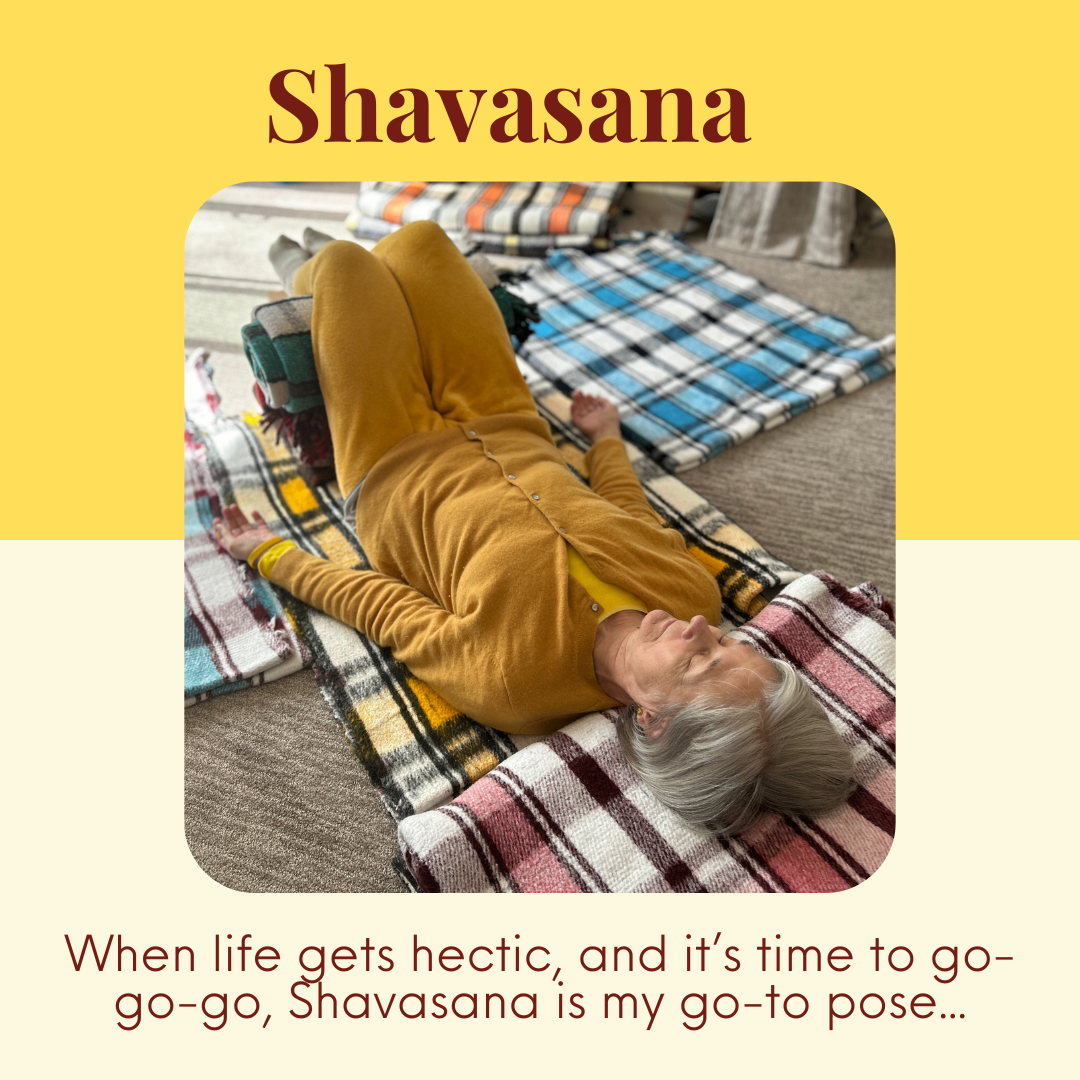
When life gets hectic, and it’s time to go-go-go, Shavasana is my go-to pose.  

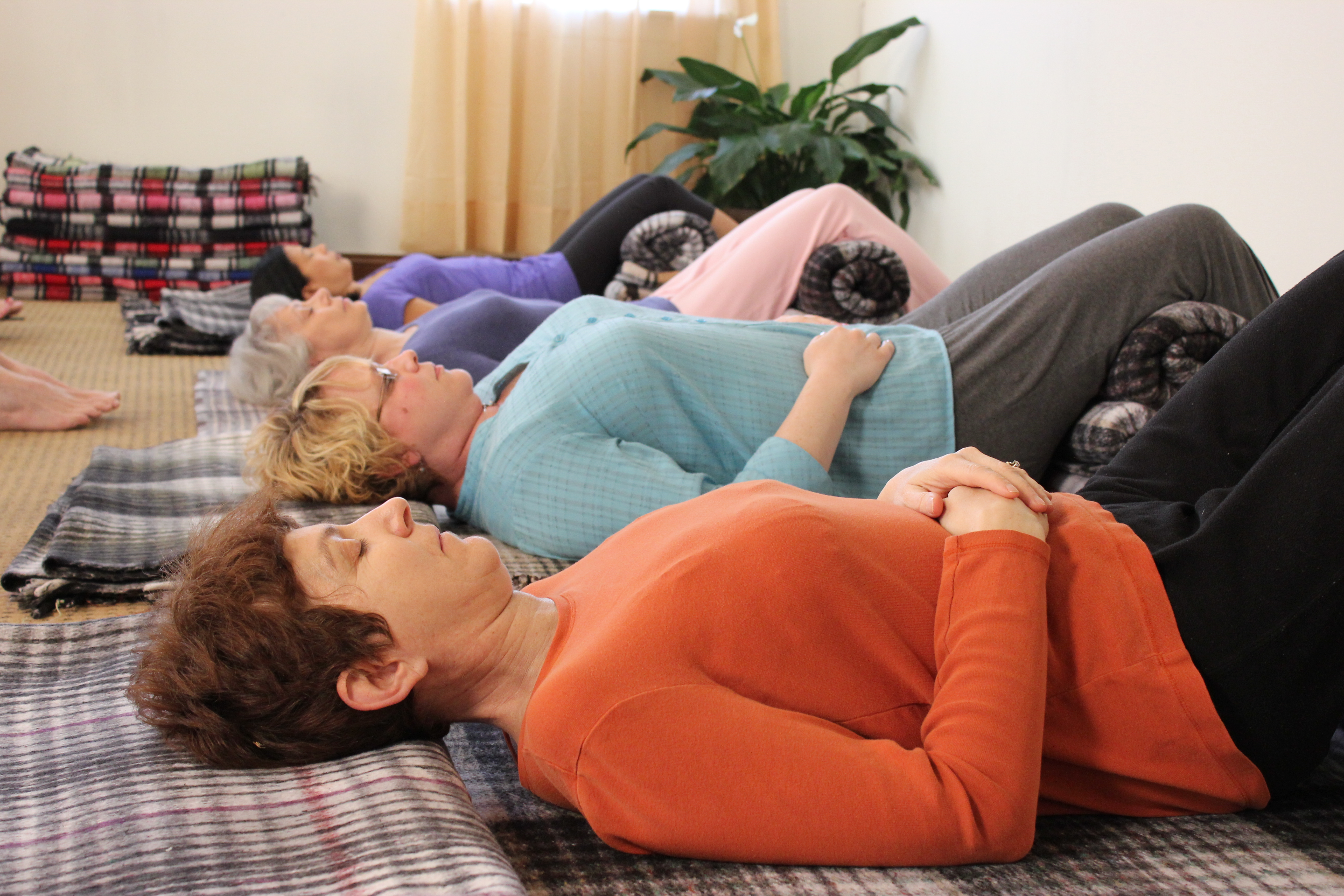
I take the time to set up my blanket stack with a carefully rolled blanket on top.  With my knees supported thus, I feel my lower back lengthen, spread, and settle into the floor.  The effect on my mind is so sweet.   

Worry melts into random thoughts.  They soon dissolve into simple clarity and gratitude for rest.  I feel my upper back receive the support of the floor.  With the back of my hands resting into the floor, my fingers soften.  They release the urge to hold on to anything.

Sometimes I silently repeat our Guided Awareness, which I know by heart.  In sequence, I find every part of my body, from my toes through my head, front and back.  This deepens my access to inner peace.

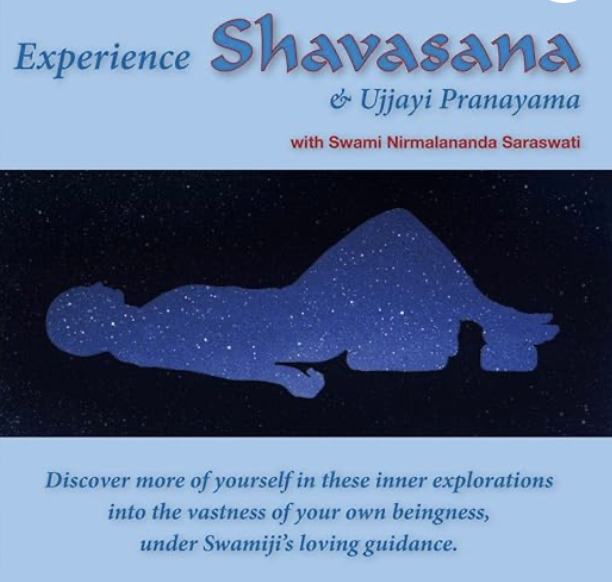
In my current process of relocating, I’m finding Gurudevi’s “Experience Shavasana” recording to be essential.  While uprooting myself, what I hear in her voice and words is transporting in a different way.  This takes me inward to the discovery of new dimensions within myself.  

Being in Shavasana, I am thoroughly grounded in the expanding awareness of Ultimate Reality and Eternality.  Bit-by-bit, my body rests ever more deeply into my blankets and the floor.  Guided in being aware of my body, I feel each area in turn filling with aliveness.

Afterwards, I rest in silence and stillness, my back evenly spread, securely supported by the floor.  The Shavasana blanket stack and roll cradle my knees.  Any previous pressure in my low back is gone.  With calm and energy at the same time, I feel whole — ready to effectively address whatever arises.

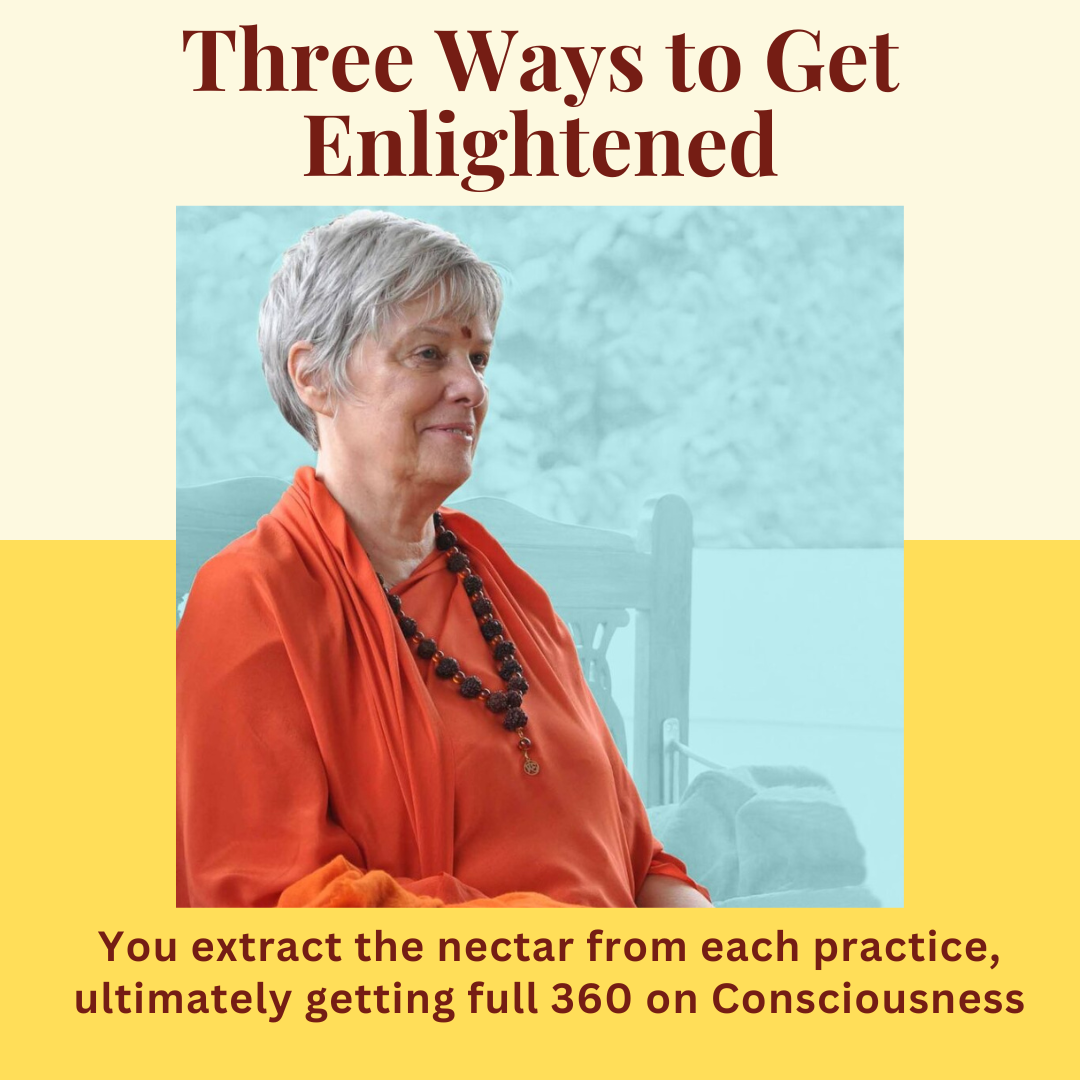
Three Ways to Get Enlightened 

By Gurudevi Nirmalananda 

You may have heard that enlightenment is easy — “You don’t need any practices, just know who you are. Just know.” Personally, I needed help with that. I needed lots of help! I got the help so I know how it works. After enough preparation, this is what happens: you just know. 

The Shiva Sutras describes this path to enlightenment, called Shambhavopaya. The word names the process: the upaya (path) of cultivating the knowing-feeling (bhava) of being Shiva (Shambho). It is a feeling of downshifting, like leaning back into your multidimensionality, the ease of settling into your own Beingness.

I teach this process in every satsang and course. I lead you past the fragmentation of your mind to a deeper inner dimension. You feel whole. You shine with light. The trick is this: when the program ends, simply continue to experience your own Shivaness. Instead, you might go back to your mind, with its many concurrent agendas.

For those who get ensnared by their mind, another upaya is best – applying your mind to Consciousness. Since it is your mind that blocks your easing into Shiva-Self, you must work with your mind. This is Shaktopaya, the upaya (path) of working with Shakti (the energy of Consciousness-Itself). 

How do you do this? You fill your mind with the energy of Consciousness by repeating the mantra. The mantra given by an authorized teacher emanates the power of Consciousness. Each time you repeat it, it uplifts your mind and mood. You can liken it to clearing the clouds out of your mind so the sunlight of your own Beingness can shine through.

This is a familiar process if you’ve attended one of my satsangs or programs. I formally give the mantra, and explain both its meaning and how to use it. When you take it with you, your progress toward enlightenment continues. But if you climb out of your… 

Subtraction Yoga

By Gurudevi Nirmalananda

You outgrow identities.  Some are already gone, things you used to do but you don’t do anymore.  That’s simply not who you are any longer.  

There probably are some things that mean everything to you now, yet you will outgrow them too.  Things come into your life; things leave.  Sometimes you’re the one who moves on.  

There is one constant reality amidst all that change.  That is an underlying inner essence, what yoga calls your own Self.  You find your own Self only when you practice subtraction instead of addition. 

Most people try to fill their life by adding things: doing this, getting that, going there and everywhere, getting to know new people and learning things.  Most people add and add and continue to add in more and more.  

But yoga fulfills your spiritual hunger in a completely different way.  It is subversive.  It is radical.  It is revolutionary.  Yoga says,

Yeah, you can have all that stuff, but you won’t find happiness in it.  You can’t find satisfaction in it.  You can’t find Self in all that stuff.  You must turn your attention inward.  You must look deeper. 

Some styles of yoga are “addition yoga.”  They add strength to your body.  They add flexibility.  Their system gives you something you don’t currently have. Svaroopa® yoga is a “subtraction yoga.”  With the poses, we move you into angles that unravel deep layers of physical tension.

There are areas of your body that have been locked down for years, areas that are knotted up, stuff that is gnarly and dense.  We begin subtracting the density.  This changes your body, and your mind and feelings are lightened up as well.  

We unravel the tensions to reveal what is hidden underneath — the deep peace that is your nature.  While you begin with your body, you discover an inner happiness that is ever-arising within.  This is a true and profound satisfaction that depends on nothing outside of you.  It is your own deeper sense of Self. 

Yoga is a process of clearing away the stuff you think you are, but that you really are not, so you can find the deeper dimension inside.  This essence that yoga uncovers is called svaroopa, Sanskrit for “your inherent Is-ness.”  Sva- means Self.  

In yoga we distinguish between “small-s self” and “capital-S Self.”  The self with the small “s” is your superficial identity or, unfortunately, multiple identities, which are supported and sustained by your activities in life.  Your capital-S Self is your deeper essence of pure Beingness. 

A yogi shared about her college-age daughter who had finished her summer job and returned to school.  During her summer vacation, she had a real job and apartment and took care of herself.  She lived like an adult for three months but returned to a college dorm.  She was having trouble adjusting.  Her sense of self had been radically altered! 

This shows how your small-s self is based on where you are and what you do: holding down a job and paying rent compared to attending classes and living in a dorm.  Your small-s self will continue to change throughout the whole rest of your life, depending on where you are, who you know and what you do.

Your capital-S Self is the unchanging reality within.  Your svaroopa is the eternal dimension of your own being, your own Divine Essence.  To know and to experience Self is the purpose of all yoga’s practices.  Yoga quiets your mind so that your underlying essence is revealed.

— Excerpt from Yoga: Embodied Spirituality, pages 14‒16

Chanting Guru Mantras

Gurudevi’s Audio Recording

By Joan (Jayadevi) Bragar 

I want to chant along during the opening of Ashram offerings both online and in person.  

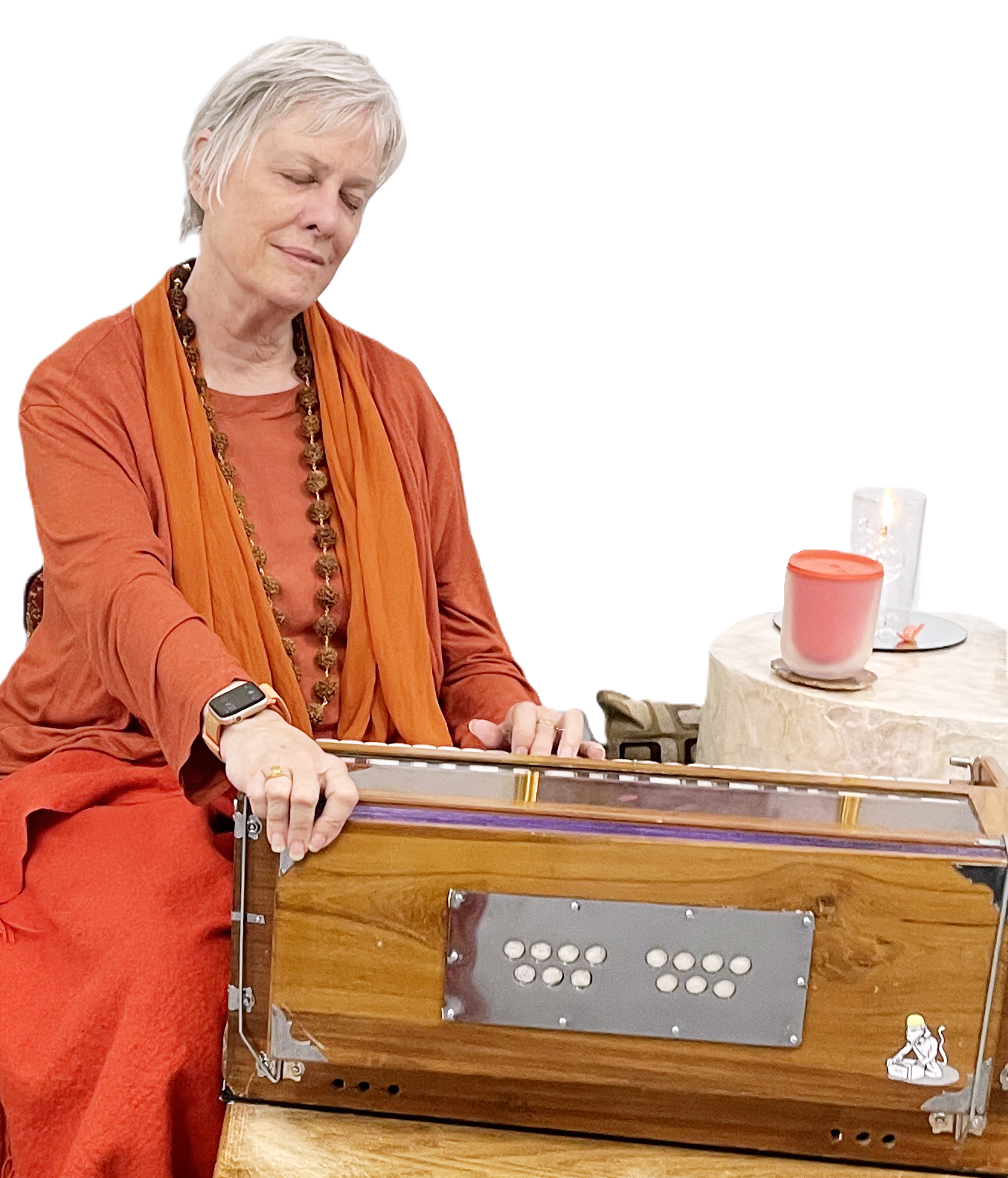
I feel more part of Ashram programs when I join in the chant of Gurudevi Nirmalananda’s “Guru Mantras.”  Consequently, more shakti moves through me.  

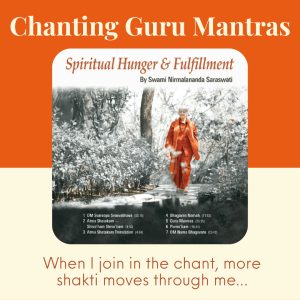
This month, I’ve been working on memorizing them on my morning walk. I discovered a great resource to learn both the melody and words of these “Guru Mantras.”

On Track 5 of Spiritual Hunger & Fulfillment, I get to hear Gurudevi’s beautiful voice repeating them for a full 25 minutes.  I love her chanting because it honors the source of our potential enlightenment — the lineage of Gurus.  It is they from whom we learn, and they continually shower us with Grace.

If you want to learn them, listen to Track 5 on Gurudevi’s Spiritual Hunger & Fulfillment album and chant along:

Gurubrahmaa guruvishnur  

gurudevo maheshwara

Gurusakshat parabrahma

tasmai shree gurave nama.h

Here is the translation:

Guru is the creative force (Brahma) & the sustaining force (Vishnu)

Guru brings an end to all things (Shiva)

Guru is the Supreme Reality (Parabrahman)

I bow with heartfelt gratitude to my honored Guru.

Let this inspire you to join in!

What Is Freedom?

By Gurudevi Nirmalananda

When I was a teenager, I often complained that this didn’t seem to be a free country. If I was free, I should be able to go where I wanted, when I wanted, and do and say what I wanted.

My mother, who carefully controlled all of those things, responded that was not the meaning of freedom. I knew that I didn’t understand her or what I had learned in school about freedom in America. 

Then I lived in Madrid during the time the Spaniards regained their freedom. I had gone to Madrid to help with the opening of a yoga center, and was living and working with Madrileños. I particularly loved my daily commute by bus, surrounded by chatter in a language I could partly understand, driving through beautiful plazas with huge, incredible fountains. 

They were preparing for their first election in 40 years, and every day there were huge political rallies that lasted until the madrugada, the wee hours of the morning. In addition to the political fervor that I recognized from elections in the USA, there was an added element of infectious joy. They were so incredibly happy to regain the right to vote. 

I began to question my idea of freedom. From the many years of schooling in American history to the many years of training in yoga philosophy was a big leap, yet they both spoke so movingly of freedom. I knew that I still didn’t understand freedom. Only with two more decades of yoga practice am I beginning to get it.

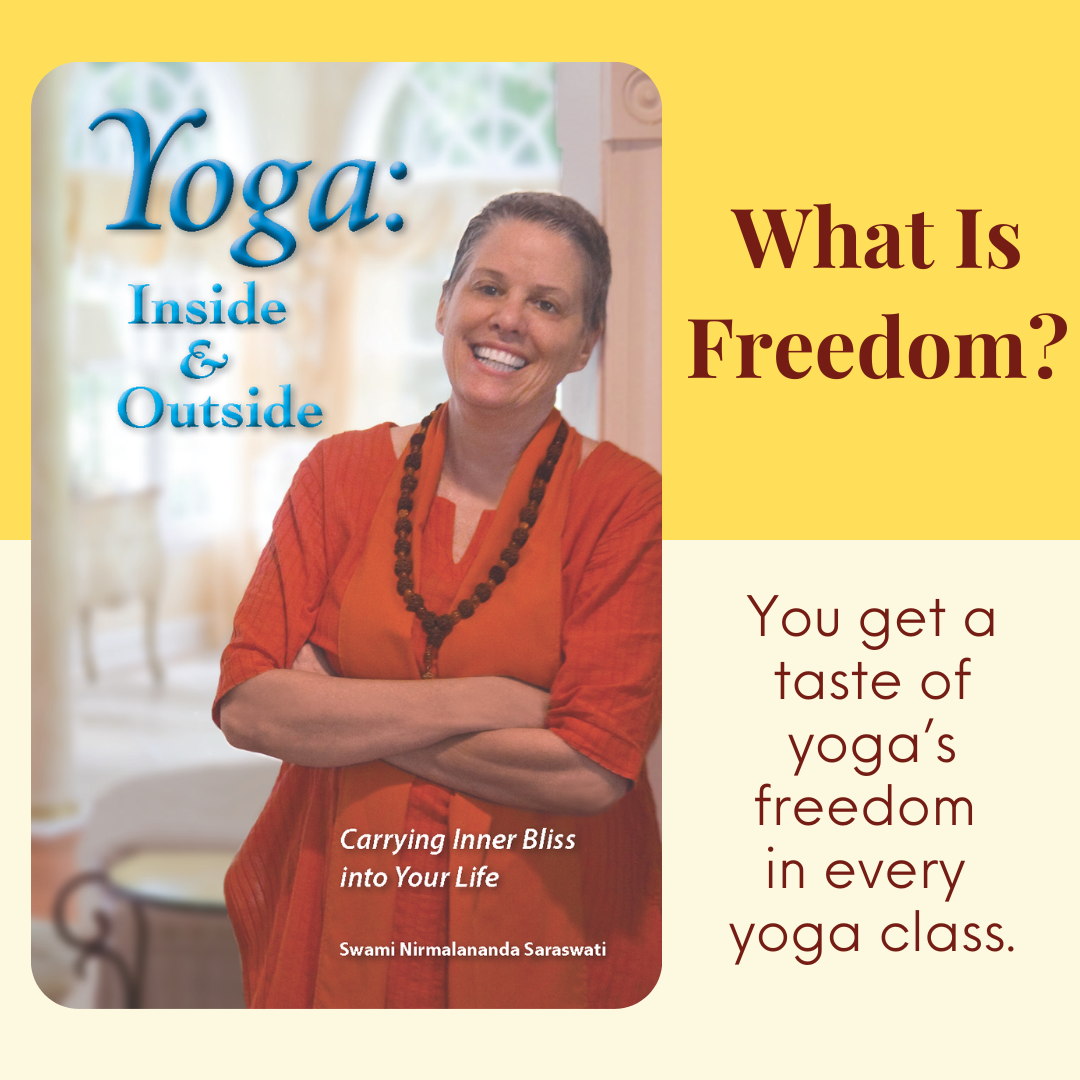
The goal in yoga is an ultimate state, described in many different terms, the most important of which is “freedom.” You get a taste of yoga’s freedom in every yoga class. It might happen to you after Seated Side Stretch, when your opening is more than merely physical. Maybe you love Jathara Parivrttanasana (Rotated Stomach Pose) because it seduces you into an irresistible inner depth.

It could happen in a backbend, when the pose stops being such a struggle and you feel like you could lift off and fly. Or maybe one of those seated forward bends makes you melt into something bigger than the universe. 

One of the most reliable places to find it is in Shavasana, especially the closing Shavasana at the end of class. The whole class is a warm-up for the final Shavasana, so you can experience the freedom at the deepest level of your own existence. Mukti — freedom.                                                                                                            

The practices of yoga provide immediate results, which is very important in our hurry-up-must-get-it-now lifestyle. Even your first class makes you feel better than you imagined possible. In the beginning, it appears that the purpose of the class is to fix your body. Familiar pains disappear or are profoundly diminished, and you enjoy a new feeling of profound relaxation and ease.

Most amazingly, you feel both relaxed and energized at the same time — a rare combination! The freedom of comfort and ease in your body is a great freedom, but yoga’s promise doesn’t end with this first blush of success.     

In addition to this feeling in your body, you experience an inner feeling of peace, from the very first class. You feel undeniably calmer on the inside. In the same way that the physical benefits develop further as you continue, this inner sense of peace develops progressively into stithi, an inner stability that supports you in all places and times. This yoga-feeling is inside you, supporting you wherever you go.

— Excerpt from Yoga Inside & Outside, pages 93‒94

Beyond Right & Wrong

By Gurudevi Nirmalananda

Once you know your own Self, it is easy to see the Divinity shing in everyone and everything. Then you cannot label anyone as bad or wrong. Labels disintegrate in the light of Consciousness.

Yet you need not worry that the state of Self-Knowingness is a stage of drunken romanticism. While seeing the Divine in the mundane, you will have clarity about whether something is working well or not. It will be obvious whether someone is focused on their own selfish purposes or giving themselves a higher purpose. You will easily see if they are entrapped in their mind and memories, or if they are living in the reality of the here-and-now. And you will see if they are making mistakes — but it’s OK if they do. After all, how did you learn most of your lessons? You made a few mistakes along the way, too.

It’s easy to understand that, when you become enlightened, you will stop judging others. You will be more understanding. You’ll know when to help and when to back off. That means all you have to do is more yoga and you’ll eventually “get there.” But there is no “there” to get to. It’s all here, right here.

It isn’t enough to merely do yoga, because you need a massive shift in perspective, so that you see life itself as yoga. Relationships are yoga. Food is yoga. This is because yoga is fundamentally about the way you use your mind, which can be yogic or unyogic. It’s time to take yoga off your blankets and mats, to begin addressing your mind. If you cannot yet see God in everything, then at least see that the world is not black and white. It’s time to see the shades of grey. Get beyond the pairs of opposites.

This can be hard if you have always been an achiever. Those who get ahead by getting things right can get stuck in the opposites: “right vs wrong,” working hard to make sure they are always right. Those who have earned other people’s love and respect by always being good can get stuck in the opposites: “good vs bad,” making sure they are always the good one.

Those who learned to win the power struggles are stuck in “my way,” never discovering that others have amazingly good ideas too. Those who found that always being bad or wrong was the way to get their needs met can end up living in this trap for the rest of their life (or even many lifetimes).

Besides the ways you use the pairs of opposites to trap yourself, you also use them to evaluate other people. When you look at your neighbors, family members, or even the other yoga student on the floor next to you, your mind begins comparing. Your mind does this because of Maya, the cosmic power of delusion, making you see this divine world as merely mundane. Maya is the Sanskrit name for Consciousness, when manifesting as the multiplicity of forms and beings in this world. Maya does this by splitting the One into many, by creating the illusion of division and separation. Since your mind is a form of Consciousness, your mind is an agent of Maya. Without you having to do anything to get it going, your mind starts measuring, analyzing, comparing and judging on its own. Everyone’s mind does this.

Different people deal with the results of their analyses in different ways. In comparing yourself with your neighbor, your mind usually finds something wrong, either with them or with you. Whichever direction your mind goes, it puts someone on the bottom of the heap. Your mind usually says one person is worse than the other. This is because the mind’s job is to cut things into pieces — not to respect, uplift or value things. This is the nature of the mind and one of the reasons you must work on it.

Excerpt from A Yogic Lifestyle, pages 8‒10

Sitting Auspiciously

By Valerie (Atmananda) Light Trautlein, Yogaratna

Right now, my favorite pose is Swastikasana.

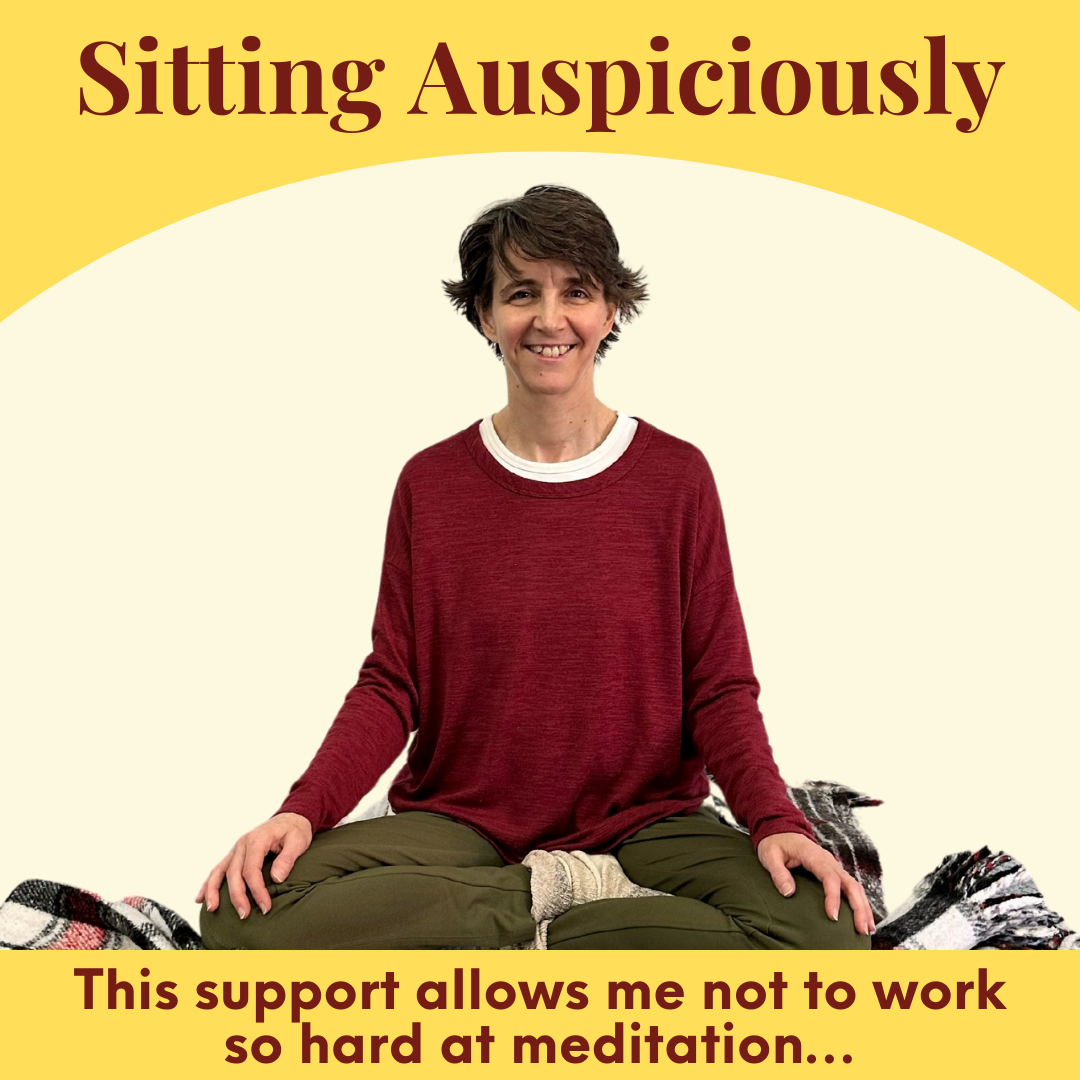
I love this pose because it supports my spine to be so upright in meditation. The “envelopes” of my thighs and calves are wonderful supports for my feet. Props for my knees give my hips and spine support.

They rest in alignment with each other. The support of blankets and my own body allows Kundalini to rise up my spine. Any blockages are cleared.

This support allows me not to work so hard at meditation. As I sit in the pose, I feel my body as one unit. This sensation of wholeness supports the truth of experiencing the One Reality as I sit.

I can remember a time when I could not sit in this position for long periods. I would experience hip and knee pain towards the end of meditation. So I decided to focus on deeper spinal release poses in my home practice.

The deep, consistent spinal release opened up the tight parts of my body. This of course addressed mental tension too. This focus created lasting change. It gave me the ability to enjoy sitting in this pose without pain. The whole thing got much easier.

The name of the pose, I find, really describes the gift of the pose. Swastikasana means auspicious sitting. Also, one translation of the Sanskrit name Shiva is “auspicious.” When I sit in Swastikasana, my body is aligned in a way to sit as my Self auspiciously with ease.

I receive support from the blankets as well as from my own body. Outside and inside work together with one goal. Sitting as Self.

Experiencing Shavasana & Ujjayi Pranayama  

Gurudevi’s Audio Recording

By Barbara (Girijananda) Hess

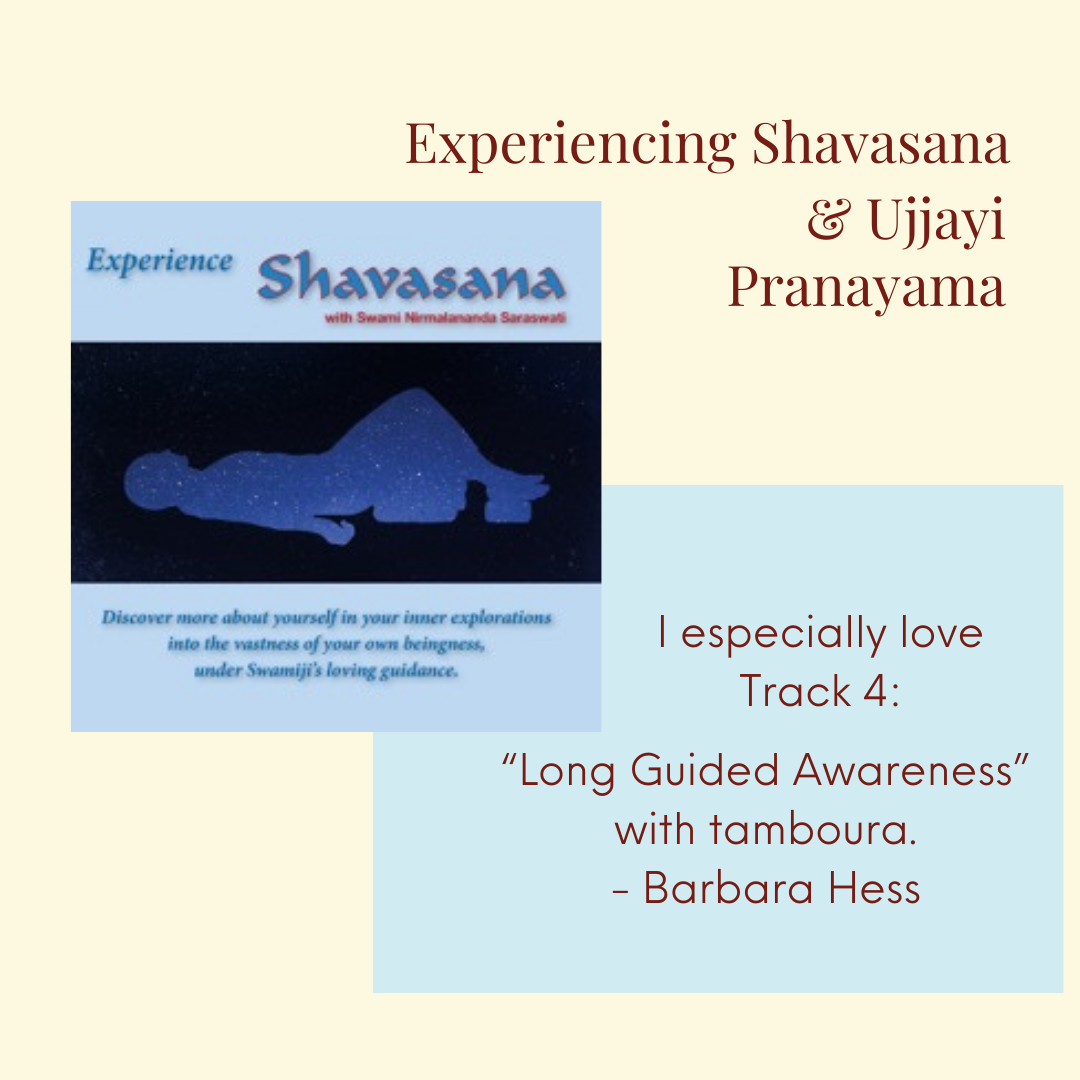
The cover says it all: “Discover more of yourself in these inner explorations into the vastness of your own beingness …”

Listening to Gurudevi Nirmalananda guide me into Shavasana with this CD has supported me for many years. The CD offers a wide range of Shavasana and Ujjayi Pranayama experiences. Some are short and others long.  You can choose the tracks that fit your available time.

I especially love the Track 4 “Long Guided Awareness” with tamboura. Gurudevi begins with the familiar “Become aware of your toes, all ten toes …” Then she continues with an in-depth inner exploration throughout your body.  I especially love the section when she tracks up your spine one vertebra at a time. I must say I missed this section for more than a year.  I would pass in before I even got to the sacrum!

Now I mostly stay conscious.  I love the deepening awareness of each vertebra.  I sense the subtle presence of the inner conduit through which Kundalini arises.  I have new, deepening awareness at different areas of my internal terrain each time I dive inside with Gurudevi’s guided awareness. It gives me a full 30 minutes of Divine exploration. 

I have recommended this CD to many students who want to be guided in Shavasana in their home practice. They report, just as I do, many new insights each time they practice Shavasana guided by Gurudevi.